About 188 minutes
Brought Forward — Story, Setting & Ideas
Science Fiction Utopias
43,205 recorded words. 2 minutes difference from this book's estimate.
View Gutenberg source #47930
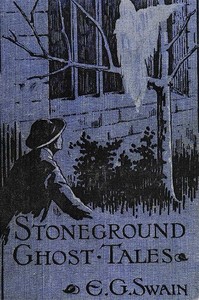
Before opening The Stoneground Ghost Tales Compiled from the recollections of the Reverend Roland Batchel, Vicar of the parish. — Inside the Classic, the edition data offers a quick orientation: 42,608 words, 3 hr 6 min estimated reading time, and 5 detected text sections.
The text analysis averages about 18.1 words per sentence, while the detected sections provide another way to judge how the source is divided.
Project Gutenberg metadata also associates the work with “Ghost stories, English,” connecting these edition facts with the source record’s subject description.
Explore this collection
These alternatives are selected using recorded categories and estimated reading time.
About 188 minutes
Science Fiction Utopias
43,205 recorded words. 2 minutes difference from this book's estimate.
View Gutenberg source #47930About 231 minutes
Science Fiction Utopias
52,951 recorded words. 45 minutes difference from this book's estimate.
View Gutenberg source #46153About 231 minutes
Science Fiction Utopias
52,996 recorded words. 45 minutes difference from this book's estimate.
View Gutenberg source #46570Search stored excerpts and compare books → Choose by your preferences →
Choices use stored catalog measurements. Estimates vary with reading speed. A shared category is a catalog label, not a claim that two books have the same argument or literary quality.
Search reads excerpt text stored with this catalog and links to its associated Gutenberg record. The connection is stored in the site database; this tool does not recheck that every excerpt is word-for-word identical to that external record. Excerpt search does not cover every chapter and does not verify historical publication dates.
Catalog snapshot checked: 2026-09-26. Coverage: 98 public books, 98 available source excerpts.
Calculated from edition completeness, EPUB availability, text structure and catalogue metadata. Not a user rating.
Total of 100 points, scaled to a 2.5-5.0 range. Editions with an empty description or a missing EPUB file are not scored.
Public-domain source text
The source text is kept in the dedicated reader, separate from this catalogue record and its commentary.
E. G. Swain's The Stoneground Ghost Tales opens with a topographical precision that grounds the supernatural in the physical world. The village of Stoneground sits on a gravel bed in the Fens, its church dominating a landscape once isolated by water. The vicarage garden, enclosed for over seven centuries, becomes a stage where the boundary between the ordinary and the uncanny is tested. Swain's narrator, the Reverend Roland Batchel, is a solitary man of studious habits, and his voice—measured, slightly antiquated, and prone to dry understatement—shapes every tale. The stories are not told for shock but as recollections, often prompted by visitors, and the author's choices in diction and dialogue reveal a world where the past refuses to stay buried, and where a misplaced stone or a returned ring carries more weight than any ghostly apparition.
Swain establishes Stoneground with a geologist's eye: the village sits on gravel above clay, the latter yielding fossil skeletons of great saurians. This layering of time—prehistoric remains beneath a medieval church—sets a tone of buried history. The description of the Lode, a sluggish stream bordering the garden, and the rockery heaped about elm trees, is not mere scene-setting. It is a map of where the uncanny will emerge. The garden's privacy, regarded as 'permanent and unchangeable' for centuries, is violated by each tale's intrusion. Swain's prose lingers on the material: the 'coarse and uninteresting plants' of the rockery, the 'park-like trimness' Mr. Batchel imposes. These details are not decorative; they are evidence of a world where the physical environment holds memory and malice.
Mr. Batchel's narration is marked by a scholarly reserve that contrasts with the strangeness of his experiences. He admits to being 'somewhat too much enamoured of his solitude' and receives schoolboys 'from time to time.' His dialogue is precise, often quoting or echoing literary phrases: when a sceptic says 'I don't believe there's no sich a thing,' Batchel recognises the allusion and responds in the manner of Mrs. Gamp. This intertextual play reveals a mind steeped in books, yet the supernatural events force him into uncharacteristic actions—slipping a sapphire ring onto his finger, memorising half a collection of lyrics. Swain uses Batchel's voice to create a tension between rational explanation and emotional attachment. The vicar never fully explains the phenomena; he merely reports them, leaving the reader to weigh his credibility.
A recurring pattern in the excerpts is the return of objects. The sapphire ring, sent back to Puna, reappears on Batchel's table with a note from 'L. R.' asking him to wear it. The ring becomes a token of a relationship the vicar cannot fully acknowledge—he thinks of 'her whom he has made happy' but also regrets 'the other fellow.' This is not a ghost in the traditional sense; it is an object animated by desire and guilt. Similarly, the rockery's stones are 'heaped' and 'overgrown,' and their removal prompts a story 'more strange than any.' Swain's ghosts are often tied to things: a roller, a bone, a lamp shade. The authorial choice to focus on material remnants—rather than spectres—gives the tales a quiet, unsettling logic. The supernatural is not ethereal but stubbornly physical.
Swain's dialogue often reveals character while withholding explanation. When Batchel hands the ring to an incredulous auditor, he says, 'What! you bage creetur, have I had this ring three year or more to be told there ain't no sech a thing.' The mimicry of Mrs. Gamp is both a joke and a deflection—the vicar uses a literary mask to avoid direct confession. The auditors' questions—'But I thought the ring was sent back'—show their need for narrative closure, which Batchel refuses to provide. He admits he 'closed his story prematurely' and then produces the note, but the note itself is ambiguous: 'Accept the ring, dear one.' The dialogue thus becomes a series of negotiations between the teller and his listeners, each trying to fix meaning onto events that resist it. Swain's ear for colloquial speech—'there ain't no sich a thing'—grounds the fantastic in the vernacular.
Swain's tales reward attention to the spaces between events: the long description of a garden path, the precise naming of a fenland stream, the offhand quotation from a novel. These are not digressions but the very substance of the uncanny. The reader is invited to watch how the ordinary becomes strange, not through dramatic revelation but through accumulation. Mr. Batchel's voice, with its blend of erudition and vulnerability, is the lens through which these disturbances are filtered. To read these stories is to listen for the creak of a floorboard in a sentence that seems merely descriptive.
That damp September, the vicar’s precise unease over a stone garden urn stayed with me long after the rain let up. I sat with the book closed, watching the gutters drip, then reached for something quieter, less haunted. Lochinvar: A Novel — Reading Notes came to hand almost on its own, and its slow, measured pacing felt like the same weather, settling.
Save your reaction, strongest insight, and memorable passage.