About 335 minutes
The Wizard's Son, Vol. 3 (of 3) — Reading Notes
Science Fiction Utopias
77,050 recorded words. 37 minutes difference from this book's estimate.
View Gutenberg source #47557
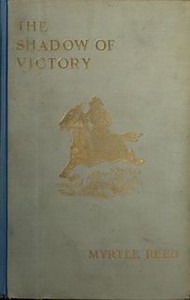
The Shadow of Victory: A Romance of Fort Dearborn — A Reader’s Guide can be approached with a clearer sense of reading commitment from its source measurements: 85,415 words, 6 hr 12 min estimated reading time, and 13 detected text sections.
The text analysis averages about 14.0 words per sentence, while the detected sections provide another way to judge how the source is divided.
Project Gutenberg metadata also associates the work with “Chicago (Ill.) -- Fiction,” connecting these edition facts with the source record’s subject description.
Explore this collection
These alternatives are selected using recorded categories and estimated reading time.
About 335 minutes
Science Fiction Utopias
77,050 recorded words. 37 minutes difference from this book's estimate.
View Gutenberg source #47557About 321 minutes
Science Fiction Utopias
73,630 recorded words. 51 minutes difference from this book's estimate.
View Gutenberg source #44888About 305 minutes
Science Fiction Utopias
70,063 recorded words. 67 minutes difference from this book's estimate.
View Gutenberg source #42944Search stored excerpts and compare books → Choose by your preferences →
Choices use stored catalog measurements. Estimates vary with reading speed. A shared category is a catalog label, not a claim that two books have the same argument or literary quality.
Search reads excerpt text stored with this catalog and links to its associated Gutenberg record. The connection is stored in the site database; this tool does not recheck that every excerpt is word-for-word identical to that external record. Excerpt search does not cover every chapter and does not verify historical publication dates.
Catalog snapshot checked: 2026-09-26. Coverage: 98 public books, 98 available source excerpts.
Calculated from edition completeness, EPUB availability, text structure and catalogue metadata. Not a user rating.
Total of 100 points, scaled to a 2.5-5.0 range. Editions with an empty description or a missing EPUB file are not scored.
Public-domain source text
The source text is kept in the dedicated reader, separate from this catalogue record and its commentary.
The novel opens in a long, low trading post with a limestone fireplace, where blazing logs cast strange shadows and the winter wind moans outside. The room is packed with frontier miscellany—smoked hams, rude counters, and a candle in a broken bottle. This confined, flickering space recurs throughout the excerpts, serving as a stage for prophecy and tension. The first chapter introduces a half-breed named Chan and a prophecy of blood, fire, and peace, delivered by a madwoman named Mad Margaret. The structure alternates between such interior scenes and outdoor conversations, often moving from the trading post to the fort's parade ground or the surrounding wilderness.
The opening chapter establishes the trading post as a recurring setting: a low-ceilinged room with a fireplace, where logs blaze and shadows shift. This image returns in later excerpts, notably when the Ensign recalls Mad Margaret's prophecy delivered by the same fire. The author uses this confined space to frame key conversations—about cattle, British threats, and the fort's vulnerability. The contrast between the warm, flickering interior and the cold, swirling snow outside mirrors the characters' uneasy blend of domesticity and danger. The firelight also illuminates the rough-hewn counters and smoked meats, grounding the romance in material details of frontier life.
Mad Margaret's prophecy—'much blood, then fire, and afterward peace'—is repeated in different contexts. In Chapter I, she tells the Ensign he will never have his heart's desire. Later, the Ensign recalls her prancing into the fort in 1810 to predict a flood, a hot summer, and crop failure, which came true. These prophecies create a pattern of foreshadowing that the excerpts do not resolve. The phrase 'the shadow of victory' in the title may echo this cycle of blood and peace. The characters treat Margaret with a mix of fear and dark humor, as when Ronald suggests using her as a talisman against Indian arrows.
The narrative shifts between the trading post's interior and outdoor spaces like the fort's parade ground. In one excerpt, the Lieutenant strides up and down in front of the house while discussing British attack plans. Beatrice's playful offer to meet the British in a pink dress with two flags contrasts with Katherine's unease. The author uses these shifts to vary tone: the cramped, shadowy interior fosters intimate, tense dialogue, while the open air allows for broader gestures and banter. The movement also mirrors the characters' psychological state—from the safety of the fort to the threat of the surrounding wilderness.
The excerpts are heavy with dialogue that reveals character and builds suspense. Beatrice's flirtatious teasing about Queen the horse and her pink-dress plan contrasts with Katherine's silent anxiety. Ronald's cynical humor—'If hell is any hotter I don't care to go to it'—masks genuine fear. The Lieutenant's grim prediction that 'the trail of blood began at Plymouth' grounds the romance in historical reality. The author uses these exchanges to advance the plot without direct narration, letting characters voice the fort's precarious situation. The Ensign's repeated references to Mad Margaret's prophecy tie the dialogue back to the novel's central image.
The excerpts offer a romance that is as much about place and premonition as about love. Readers attentive to the recurring firelight, the prophecies, and the shifts between interior and exterior will find a story that uses setting to heighten emotional stakes. The incomplete excerpts leave the fate of the fort and its inhabitants uncertain, but the pattern of blood and peace suggests a resolution that may not be entirely happy.
There’s something about Myrtle Reed’s firelight—that flicker between flirtation and foreboding—that stays with you long after the last page. I found myself thinking of it while revisiting an old copy of Stover at Yale, where the same tension hums beneath collegiate ambition, each choice shadowed by a different kind of reckoning. Both books feel like quiet rooms where the future is already casting its light. Stover at Yale — Reading Companion sits beside them on my shelf now, a familiar, uneasy comfort.
Your answers remain private and are stored only in this browser.