About 119 minutes
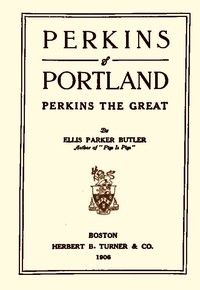
Perkins of Portland: Perkins The Great — Reading Notes
Science Fiction Utopias
27,249 recorded words. 64 minutes difference from this book's estimate.
View Gutenberg source #44151
The source record for Doctor Birch and His Young Friends — Reading Notes measures this digital text at 12,438 words, 55 min estimated reading time, and 2 detected text sections.
The text analysis averages about 19.9 words per sentence, while the detected sections provide another way to judge how the source is divided.
Project Gutenberg metadata also associates the work with “Schools -- Fiction,” connecting these edition facts with the source record’s subject description.
Explore this collection
These alternatives are selected using recorded categories and estimated reading time.
About 119 minutes
Science Fiction Utopias
27,249 recorded words. 64 minutes difference from this book's estimate.
View Gutenberg source #44151About 186 minutes
Science Fiction Utopias
42,608 recorded words. 131 minutes difference from this book's estimate.
View Gutenberg source #44581About 188 minutes
Science Fiction Utopias
43,205 recorded words. 133 minutes difference from this book's estimate.
View Gutenberg source #47930Search stored excerpts and compare books → Choose by your preferences →
Choices use stored catalog measurements. Estimates vary with reading speed. A shared category is a catalog label, not a claim that two books have the same argument or literary quality.
Search reads excerpt text stored with this catalog and links to its associated Gutenberg record. The connection is stored in the site database; this tool does not recheck that every excerpt is word-for-word identical to that external record. Excerpt search does not cover every chapter and does not verify historical publication dates.
Catalog snapshot checked: 2026-09-26. Coverage: 98 public books, 98 available source excerpts.
Calculated from edition completeness, EPUB availability, text structure and catalogue metadata. Not a user rating.
Total of 100 points, scaled to a 2.5-5.0 range. Editions with an empty description or a missing EPUB file are not scored.
Public-domain source text
The source text is kept in the dedicated reader, separate from this catalogue record and its commentary.
Thackeray, writing as Mr. M. A. Titmarsh, opens with a narrator who bluntly admits that his reasons for becoming an assistant master at Doctor Birch's Academy were not noble: 'there was good reason for my leaving lodgings near London.' The voice is weary, sardonic, and keenly aware of status—he notes the 'vulgar insolence' of Miss Birch and the 'glum condescension' of Jack Birch. This is not a sentimental school story; the narrator's grievances are specific and personal, from the poor fare at the usher's table to the indignity of being patronized by the Doctor.
The excerpts reveal a finely graded social order. At the top is the Rev. Jack Birch, described as a 'supercilious little prig' who 'didn't do much business in the school' but wrote sanctimonious letters to parents. Below him is Prince, the real master—'shy, haughty, and learned'—who commands respect through bravery and competence. The narrator places himself beneath both, resentful of his own subordinate role. Among the boys, the hierarchy is enforced by physical intimidation and economic predation. Duval, 'the pirate of Birch's,' confiscates tarts from smaller boys; Bullock, a nascent capitalist, lends money at interest and negotiates knife sales. The dormitory scene shows Hewlett bullying Nightingale into singing on command, with a shoe ready to throw. These vignettes collectively depict a system where power is exercised openly, with little pretense of moral instruction.
Thackeray devotes considerable attention to the boys' financial dealings, which mirror adult commerce in miniature. Bullock's 'commercial genius' manifests in speculations in toffee, a liquorice drink, and lending novels for a fee. By the end of the half-year, he is richer than when he arrived, with 'twenty, thirty, fifty' sovereigns—a sum the narrator treats as fabulous. Bullock's denial of his wealth ('he turns pale and swears he has not a shilling') is a comic but pointed observation on the gap between appearance and reality. Duval's methods are more candid: he simply takes what he wants, proposing a bill of exchange when forced to repay. The narrator notes that Duval's father does not pay the Doctor, yet the school tolerates him. The economy of the school runs on credit, barter, and theft, with the Doctor himself 'a kindly man enough' who never turns out an insolvent boy. This is a world where financial acumen, not virtue, determines success.
The narrator's tone is a crucial element. He presents himself as a victim of circumstance, but his judgments are sharp and often petty. He describes Jack Birch's white neckcloth as looking 'as if it choked him,' and he resents being treated 'as if we were a couple of footmen.' Yet he also admits that his own motives for taking the post were not idealistic. This self-awareness complicates his authority: we see the school through a lens of grievance. The excerpts do not reveal whether the narrator is reliable or merely bitter. His praise of Prince—'good old Prince!'—is warm, but his account of the boys' cruelties is delivered with a kind of weary amusement. The effect is a portrait of a school that is neither wholly condemned nor romanticized, but observed with a satirist's eye for hypocrisy and self-interest. The reader is left to weigh the narrator's perspective against the evidence of the scenes he describes.
Readers should attend to the tension between the narrator's professed detachment and his evident investment in the school's dramas. The excerpts offer no overarching plot; instead, they accumulate character sketches and incidents that build a coherent world. Thackeray's use of the pseudonym Titmarsh and the framing device of a former master looking back invites skepticism about the accuracy of the account. The book rewards attention to small details—the price of a knife, the wording of a threat—that reveal the social logic of the academy.
Reading about Dr. Birch’s under-master brought back the grey afternoons I spent in a school library, feeling like a ghost at the back of a classroom. The petty hierarchies and quiet cruelties felt achingly familiar. I remember finding The Diary of a Freshman — Background and Themes later, and how it held that same strange, knowing warmth about institutional loneliness. Both books felt like a hand on a shoulder, saying, yes, I saw it too.
Create a short personal record of your experience with this book.