About 301 minutes
The Vanishing of Betty Varian — Text and Context
Science Fiction Utopias
69,089 recorded words. 4 minutes difference from this book's estimate.
View Gutenberg source #45912
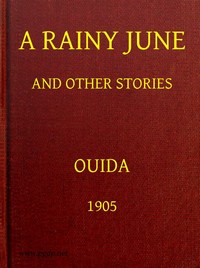
A Rainy June, and Other Stories — Themes and Context can be approached with a clearer sense of reading commitment from its source measurements: 70,063 words, 5 hr 5 min estimated reading time, and 6 detected text sections.
The text analysis averages about 21.2 words per sentence, while the detected sections provide another way to judge how the source is divided.
Project Gutenberg metadata also associates the work with “English fiction,” connecting these edition facts with the source record’s subject description.
Explore this collection
These alternatives are selected using recorded categories and estimated reading time.
About 301 minutes
Science Fiction Utopias
69,089 recorded words. 4 minutes difference from this book's estimate.
View Gutenberg source #45912About 300 minutes
Science Fiction Utopias
68,991 recorded words. 5 minutes difference from this book's estimate.
View Gutenberg source #46457About 291 minutes
Science Fiction Utopias
66,851 recorded words. 14 minutes difference from this book's estimate.
View Gutenberg source #46958Search stored excerpts and compare books → Choose by your preferences →
Choices use stored catalog measurements. Estimates vary with reading speed. A shared category is a catalog label, not a claim that two books have the same argument or literary quality.
Search reads excerpt text stored with this catalog and links to its associated Gutenberg record. The connection is stored in the site database; this tool does not recheck that every excerpt is word-for-word identical to that external record. Excerpt search does not cover every chapter and does not verify historical publication dates.
Catalog snapshot checked: 2026-09-26. Coverage: 98 public books, 98 available source excerpts.
Calculated from edition completeness, EPUB availability, text structure and catalogue metadata. Not a user rating.
Total of 100 points, scaled to a 2.5-5.0 range. Editions with an empty description or a missing EPUB file are not scored.
Public-domain source text
The source text is kept in the dedicated reader, separate from this catalogue record and its commentary.
Ouida's A Rainy June, and Other Stories opens with a letter from an Italian prince to a duchess, confessing his enchantment with an Englishwoman he describes as 'a lily made into a woman.' This epistolary beginning establishes a pattern of contrasts—between Italian and English sensibilities, between spiritual purity and worldly vulgarity—that runs through the collection. The prince's hyperbolic language, calling her 'as blonde as the dawn and as pure as a pearl,' immediately signals Ouida's ornate, emotionally charged style.
The second story, 'Don Gesualdo,' shifts to a Sicilian village where a priest confronts a carter who has confessed to murder under the seal of confession. The carter's stolid refusal to surrender himself, his resentment of the miller's widow's finery, and his chilling pragmatism—'Hell is far off, and the galleys are near'—create a stark moral impasse. Ouida's prose here is dense with psychological detail, contrasting the priest's fervent conviction with the criminal's impenetrable self-love.
The opening story, 'A Rainy June,' is told entirely through a letter from the Principe di San Zenone to the Duchessa dell'Aquila Fulva. This form allows Ouida to blend confession and justification, as the prince defends his infatuation while acknowledging the duchess's disapproval. He contrasts the Englishwoman's 'repose' and 'innocence' with the 'crowded, over-coloured, vulgar London life,' and explicitly distances her from 'the fast young ladies of England' seen in Rome. The letter's intimate tone—'Carissima Teresa'—and its detailed descriptions of her standing 'with a knot of roses in her hand under a cedar tree' create a vivid, subjective portrait. Yet the reader only hears one side, leaving the duchess's response and the woman's own character implied. This asymmetry heightens the sense of cultural and emotional distance, as the prince's Italian romanticism clashes with English restraint. Ouida uses the letter to explore how love is mediated through language, with the prince's metaphors (snow on the Leonessa, cool spring water) revealing his own idealizing gaze.
In 'Don Gesualdo,' Ouida presents a priest trapped by the seal of confession. The carter has confessed to murdering his master, but refuses to surrender to justice, motivated by spite toward the miller's widow Generosa, who now suffers in prison. Don Gesualdo's arguments—'You will burn for ever if you persist in such hideous wickedness'—are met with the carter's blunt reply: 'Hell is far off, and the galleys are near.' The story's tension lies in the priest's inability to move the criminal, whose 'stolid ignorance and self-love' form an 'absolute shield against persuasion.' Ouida emphasizes the carter's class resentment: he envies Generosa's 'finery' and 'pearl necklace,' recalling her imperious commands to draw water or carry wood. The confession, made 'per sfogarsi' (to relieve himself), becomes a burden shared but not absolved. The priest's anguish—'he could awaken no sense of guilt in the conscience of the criminal'—underscores a crisis of faith and justice, where ecclesiastical authority meets human obduracy.
Across the excerpts, Ouida employs recurring imagery that ties the stories together. Whiteness appears prominently: the Englishwoman is 'so white,' compared to 'snow on the Leonessa'; Generosa's 'pearl necklace' and 'silver hairpins' evoke a similar purity that contrasts with the carter's grime. The natural world is used symbolically—the cedar tree, the river, the millstones—but also as a site of social encounter. The prince's first sight of the woman occurs at an 'afternoon club on the river,' a setting that blends leisure with artificiality. In 'Don Gesualdo,' the millstone becomes a metaphor for the carter's deafness: 'he might as well have spoken to the great millstones that rest in the river water.' These details suggest a pattern of innocence corrupted or inaccessible, whether through class envy, cultural misunderstanding, or moral failure. Ouida's prose, with its long, periodic sentences and precise physical descriptions, creates a world where beauty and brutality coexist, and where characters are often trapped by their own natures.
Readers approaching this collection should attend to the way Ouida builds each story around a central confrontation—between lovers, between a priest and a sinner, between faith and doubt. The ornate language is not mere decoration; it carries the emotional weight of characters who are acutely aware of their own positions. The incomplete excerpts leave the resolutions of 'Don Gesualdo' and 'The Silver Christ' unknown, but the patterns established—of stubbornness, of longing, of moral complexity—offer a coherent vision of human limitation.
Answer a few questions and save a private reflection on this device.