About 281 minutes
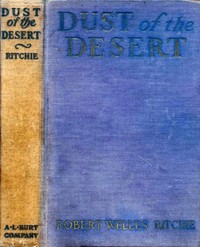
Dust of the Desert — Edition Insights
Science Fiction Utopias
64,551 recorded words. 0 minutes difference from this book's estimate.
View Gutenberg source #44691
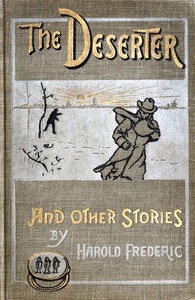
The catalog record for The Deserter, and Other Stories: A Book of Two Wars — Reading Notes provides practical reading context through 64,485 words, 4 hr 41 min estimated reading time, and 7 detected text sections.
The text analysis averages about 18.7 words per sentence, while the detected sections provide another way to judge how the source is divided.
Project Gutenberg metadata also associates the work with “United States -- History -- Civil War, 1861-1865 -- Fiction,” connecting these edition facts with the source record’s subject description.
Explore this collection
These alternatives are selected using recorded categories and estimated reading time.
About 281 minutes
Science Fiction Utopias
64,551 recorded words. 0 minutes difference from this book's estimate.
View Gutenberg source #44691About 291 minutes
Science Fiction Utopias
66,851 recorded words. 10 minutes difference from this book's estimate.
View Gutenberg source #46958About 269 minutes
Science Fiction Utopias
61,702 recorded words. 12 minutes difference from this book's estimate.
View Gutenberg source #46787Search stored excerpts and compare books → Choose by your preferences →
Choices use stored catalog measurements. Estimates vary with reading speed. A shared category is a catalog label, not a claim that two books have the same argument or literary quality.
Search reads excerpt text stored with this catalog and links to its associated Gutenberg record. The connection is stored in the site database; this tool does not recheck that every excerpt is word-for-word identical to that external record. Excerpt search does not cover every chapter and does not verify historical publication dates.
Catalog snapshot checked: 2026-09-26. Coverage: 98 public books, 98 available source excerpts.
Calculated from edition completeness, EPUB availability, text structure and catalogue metadata. Not a user rating.
Total of 100 points, scaled to a 2.5-5.0 range. Editions with an empty description or a missing EPUB file are not scored.
Public-domain source text
The source text is kept in the dedicated reader, separate from this catalogue record and its commentary.
Harold Frederic opens "The Deserter" with a cold so specific it becomes a character: "the coldest morning of the winter, thus far," on northern tablelands where streams "still run black in token of their forest origin." The prose lingers on physical sensation—Job Parshall's struggle with an ice-bound pump, the "wee, faint light" of crusted snow—before any human conflict appears. This attention to tactile detail, drawn from the Adirondack setting, establishes a world where nature is an active, adversarial force. Frederic similarly anchors his Wars of the Roses tale in sensory precision: a "sharp wind" under which "tree-tops moaned," and the distant sound of firing. Across both historical frames, the author builds atmosphere through concrete, bodily experience rather than abstract exposition.
Frederic renders speech with careful regional inflection, using nonstandard grammar and vocabulary to root characters in their specific geography and social standing. In the Civil War story, Job Parshall thinks in a vernacular that matches his rural New York origin: "It would be bad enough when daylight came, but the darkness of this early hour made it almost too much for flesh and blood to bear." The boy Lafe speaks with colloquial directness—"I bet that's a relation of mine"—while the captured Red Pete is given a rougher, more clipped idiom. The author does not italicize or otherwise flag these usages as quaint; they are presented as natural, unremarked-upon speech. This technique avoids condescension and instead uses dialogue to convey character background and regional identity without explanatory narration. In the medieval story, the language shifts to a more formal, archaic register—"Sir Watty came stalking down"—signaling a different world while maintaining Frederic's ear for spoken rhythm.
Frederic employs physical objects as narrative devices that reveal backstory and motivate action. The most striking example is the gold watch taken from Red Pete's pocket. Its engraved inscription—"Presented to Lieut. Lyman Hornbeck, January 22, 1864, by his friends and admirers Of St. Mark's Church, Cleveland"—triggers Lafe's recognition: "I've got an uncle... My father's brother was Lyman Hornbeck." This single object bridges the gap between the battlefield present and a family history the reader has not yet encountered. The watch is not merely a plot convenience; its detailed engraving, the way Lafe "pry[s] open the back of the case with his nail," and the act of reading the script aloud all emphasize the material reality of the clue. Similarly, the white flag improvised from "a roll of bandage-linen" and the shovels for burying the dead are functional items that carry symbolic weight—mercy and ritual amid chaos. Frederic trusts objects to do the work of exposition.
The terrain in these stories is never merely scenic; it is a practical and psychological space that characters must read and navigate. In "A Day in the Wilderness," the valley "lost itself a hundred yards away in dense thickets," and the boy Lafe assesses their position: "There's been rough-and-tumble fighting all around here, and there's no way of figuring out where our people are." He scans the creek bank, noting that "all the lifeless forms on the grass wore the uniforms of privates," and deduces that an officer might lie in the swampy ground "which lay so much lower than the bank." Frederic describes the morass with botanical precision—"high, bushing willows and rank growths of tall marsh grass," reeds and flags blown "stiffly sidewise"—making the landscape legible as both obstacle and hiding place. The physical world is not a backdrop but a set of constraints and opportunities that characters must interpret, much as they interpret each other's words.
Frederic's narrator reports events and sensory details without stepping forward to judge or explain. When Lafe and Foldeen decide to bury the dead and raise a white flag, the text simply states: "They turned back into the breastwork, and Lafe, rummaging among the knapsacks, speedily found a roll of bandage-linen which would serve his purpose." No comment is made on the ethics of their choice or the horror of the scene. The dead are described only as "lifeless forms" in uniform; the reader infers the carnage. Similarly, when Red Pete is captured, the narrative notes that "the excitement of his capture having died away, they now scarcely gave him a glance"—a flat, almost clinical observation that leaves the moral weight to the reader. This restraint extends to the Wars of the Roses story, where a line like "Two Dozen Pike-Heads clashed down as by a Single Touch" conveys violence through sound and image rather than through emotional commentary. Frederic's authorial voice is that of a witness, not a preacher.
Readers attentive to Frederic's craft will notice how he builds meaning from the ground up: a frozen pump, a watch case, a thicket of willows. His characters speak in idioms that reveal their origins, and his landscapes demand to be read as carefully as dialogue. The collection rewards those who watch for small, concrete details—the way a hand turns over a watch, the sound of wind in tree-tops—because these are the tools Frederic uses to tell his stories without telling the reader what to think. Approach these tales as you would a field sketch: look for the precise line, the telling object, the unspoken gesture.
Old Harold Frederic knew how cold a battlefield can feel when a man’s heart has gone quiet, and how a watch inscription can speak louder than any speech. I think of Dust of the Desert in that same hush—sand instead of snow, but the same lonesome evidence left behind. Dust of the Desert — Edition Insights holds that desert stillness like a kept secret, and I find myself returning to both when I need their particular silence.
Your answers remain private and are stored only in this browser.