About 281 minutes
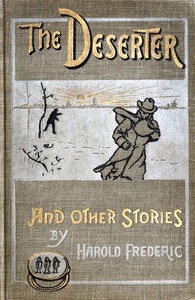
The Deserter, and Other Stories: A Book of Two Wars — Reading Notes
Science Fiction Utopias
64,485 recorded words. 0 minutes difference from this book's estimate.
View Gutenberg source #44304
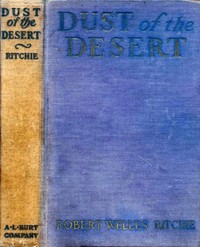
Dust of the Desert — Edition Insights can be approached with a clearer sense of reading commitment from its source measurements: 64,551 words, 4 hr 41 min estimated reading time, and 6 detected text sections.
The text analysis averages about 19.4 words per sentence, while the detected sections provide another way to judge how the source is divided.
Project Gutenberg metadata also associates the work with “Western stories,” connecting these edition facts with the source record’s subject description.
Explore this collection
These alternatives are selected using recorded categories and estimated reading time.
About 281 minutes
Science Fiction Utopias
64,485 recorded words. 0 minutes difference from this book's estimate.
View Gutenberg source #44304About 291 minutes
Science Fiction Utopias
66,851 recorded words. 10 minutes difference from this book's estimate.
View Gutenberg source #46958About 269 minutes
Science Fiction Utopias
61,702 recorded words. 12 minutes difference from this book's estimate.
View Gutenberg source #46787Search stored excerpts and compare books → Choose by your preferences →
Choices use stored catalog measurements. Estimates vary with reading speed. A shared category is a catalog label, not a claim that two books have the same argument or literary quality.
Search reads excerpt text stored with this catalog and links to its associated Gutenberg record. The connection is stored in the site database; this tool does not recheck that every excerpt is word-for-word identical to that external record. Excerpt search does not cover every chapter and does not verify historical publication dates.
Catalog snapshot checked: 2026-09-26. Coverage: 98 public books, 98 available source excerpts.
Calculated from edition completeness, EPUB availability, text structure and catalogue metadata. Not a user rating.
Total of 100 points, scaled to a 2.5-5.0 range. Editions with an empty description or a missing EPUB file are not scored.
Public-domain source text
The source text is kept in the dedicated reader, separate from this catalogue record and its commentary.
Robert Welles Ritchie’s Dust of the Desert opens with a prologue that immediately establishes a distinctive voice—one that blends the cadence of an old chronicle with the urgency of a pulp adventure. The prose is deliberately archaic, employing phrases like “Roads of men thread the world” and “vibrant with a pulse of affairs,” which give the narrative a mythic weight. This is not a simple Western; it is a story steeped in the language of a bygone era, where the desert itself becomes a character with a history written in “tears and blood.” Ritchie’s diction choices, such as “malapais” for lava rock and “Papagueria” for the region, root the tale in specific geography while his sentence structures—long, rolling, and occasionally inverted—evoke the style of nineteenth-century adventure fiction.
Ritchie’s narrative voice is notable for its deliberate archaism. Words like “thread,” “vibrant,” and “reckless adventuring” appear in the prologue, setting a tone that is both formal and romantic. The author frequently uses compound constructions such as “Faith, valour, reckless adventuring, thirst for gold, love o’ women” to create a rhythmic, almost biblical list. This choice elevates the desert landscape from mere setting to a stage for epic deeds. The prose often shifts between this elevated register and more colloquial dialogue, creating a tension between the mythic past and the gritty present of the characters.
The desert is rendered through vivid sensory details that go beyond visual description. Ritchie writes of “the white-hot sky,” “cinder-red” sierras, and “mirage quivering into nothingness.” He also evokes sound and movement: “a spiral dust cloud walked across the wastes,” and the car’s engine is described as a “beast concealed in pipes and rods” that answers “each downward thrust with a roar.” The physical sensations of heat, thirst, and the prickling of excitement are conveyed through concrete nouns and active verbs, grounding the fantastical elements in a palpable reality.
Dialogue in the excerpts reveals character through speech patterns. Doc Stooder’s lines are terse and pragmatic: “Prime cathartic for the mind,” he grunts, and his humming of “an ancient bar-room ditty” under stress contrasts with Guadalupe’s more formal, observant speech. The Indian guide’s dialogue is rendered in a stylized English that suggests translation, with phrases like “A sign—a sign!” and references to “Elder Brother.” Ritchie uses these differences to underscore cultural divides and to give each character a distinct verbal fingerprint, from the Doc’s slang to Guadalupe’s reverent exclamations.
The prologue is structured as a historical mini-narrative, moving from the general (“Roads of men thread the world”) to the specific (El Camino de los Muertos). Ritchie employs a cumulative sentence style, piling details of the padres’ journey and the later gold rush to build a sense of layered history. The pacing is deliberate, with short declarative sentences like “The cross fell from the hands of spent zealots” punctuating longer descriptive passages. This rhythm creates a sense of inevitability, as if the desert itself is a force that shapes all who enter it.
Readers attentive to Ritchie’s authorial choices will find a work that uses language as a tool for world-building. The archaic diction, sensory overload, and varied dialogue are not mere decoration but serve to immerse the reader in a desert that is both physical and legendary. Pay attention to how the prose shifts between the mythic prologue and the more direct action of later chapters—this contrast is key to understanding the novel’s dual nature as both adventure story and historical meditation.
Years of shelving have shown me how a desert’s silence can hold the very same patient hum as a schoolroom’s chalk dust. Ritchie’s treasure seekers, their bootsteps echoing off old padre walls, share a kinship with Master Birch’s quiet grammar of friendship—both are simply maps drawn in daily care. There’s a sweet, dusty warmth in each, if one listens closely. Doctor Birch and His Young Friends — Reading Notes keeps that same small, true heartbeat.
Build a private reading journal entry for this title.