About 281 minutes
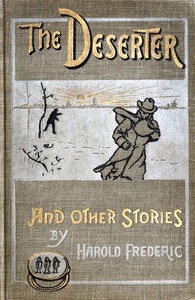
The Deserter, and Other Stories: A Book of Two Wars — Reading Notes
Science Fiction Utopias
64,485 recorded words. 12 minutes difference from this book's estimate.
View Gutenberg source #44304
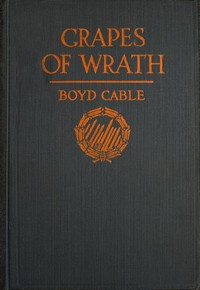
Before opening Grapes of wrath — Reading Notes, the edition data offers a quick orientation: 61,702 words, 4 hr 29 min estimated reading time, and 6 detected text sections.
The text analysis averages about 23.5 words per sentence, while the detected sections provide another way to judge how the source is divided.
Project Gutenberg metadata also associates the work with “World War, 1914-1918 -- Fiction,” connecting these edition facts with the source record’s subject description.
Explore this collection
These alternatives are selected using recorded categories and estimated reading time.
About 281 minutes
Science Fiction Utopias
64,485 recorded words. 12 minutes difference from this book's estimate.
View Gutenberg source #44304About 281 minutes
Science Fiction Utopias
64,551 recorded words. 12 minutes difference from this book's estimate.
View Gutenberg source #44691About 291 minutes
Science Fiction Utopias
66,851 recorded words. 22 minutes difference from this book's estimate.
View Gutenberg source #46958Search stored excerpts and compare books → Choose by your preferences →
Choices use stored catalog measurements. Estimates vary with reading speed. A shared category is a catalog label, not a claim that two books have the same argument or literary quality.
Search reads excerpt text stored with this catalog and links to its associated Gutenberg record. The connection is stored in the site database; this tool does not recheck that every excerpt is word-for-word identical to that external record. Excerpt search does not cover every chapter and does not verify historical publication dates.
Catalog snapshot checked: 2026-09-26. Coverage: 98 public books, 98 available source excerpts.
Calculated from edition completeness, EPUB availability, text structure and catalogue metadata. Not a user rating.
Total of 100 points, scaled to a 2.5-5.0 range. Editions with an empty description or a missing EPUB file are not scored.
Public-domain source text
The source text is kept in the dedicated reader, separate from this catalogue record and its commentary.
Boyd Cable’s Grapes of Wrath (1917) immerses the reader in the First World War through the eyes of a British infantry unit, the Stonewalls, during the Battle of the Somme. The narrative relies heavily on colloquial dialogue and sensory description to convey the physical and psychological pressures of trench warfare. Cable, who served as a forward artillery officer, draws on firsthand experience to render the chaos of shellfire, the labor of trench repair, and the laconic humor of men under duress. The excerpts show a writer more interested in capturing the texture of a moment—the weight of a sandbag, the drone of a shell—than in advancing a conventional plot.
Cable’s soldiers speak in distinct vernaculars that reveal their origins and temperaments. Pug, a Cockney, uses phrases like “Gaw’strewth” and “I’m blowed if I know anythink about it,” while Kentucky employs Americanisms such as “I’m some worried” and “Jes’ look and see ’em come a-boiling.” This linguistic contrast is not merely decorative; it underscores the composite nature of the British forces in 1916, which included volunteers from across the Empire. The men’s exchanges are terse, often sardonic, and rarely sentimental. When Pug complains about the endless digging, his humor is a coping mechanism: “I was beginnin’ to think this trench was good enough for anythin’.” The dialogue thus serves both characterization and the larger theme of endurance.
Cable builds his scenes through a relentless accumulation of sounds, sights, and physical sensations. Shells are described as “shrieking,” “crackling,” and “dropping ponderously in geyser-like spoutings of mud and earth and smoke.” The air “sang to the drone and whine of flying shell fragments.” This auditory overload is matched by tactile details: Pug “heaving a half-split sandbag into place” and “flattening it down with the blows of a broken pick-handle.” The narrative rarely pauses for reflection; instead, it thrusts the reader into the immediate, overwhelming present. Cable’s prose is functional and precise, avoiding metaphor in favor of reportorial clarity, which heightens the sense of authenticity.
The excerpted passage follows a clear episodic pattern: a lull in shelling, a sudden intensification, the order to “stand to,” and the sight of a German counter-attack. This rhythm mirrors the unpredictable tempo of trench warfare. Cable uses the interval between barrages to allow brief exchanges of dialogue, then disrupts them with renewed violence. The officer’s command to “chuck it out in front” and Pug’s muttered complaint about being kept in the dark illustrate the gap between strategic knowledge and the soldier’s limited perspective. The narrative stays tightly focused on what the men can see and hear, never adopting an omniscient view of the battle. This structural choice reinforces the theme of limited understanding under fire.
Artillery dominates the action, both as a physical threat and as a subject of dark humor. Pug mocks newspaper clichés like “ar-tillery doo-el,” while another soldier notes that gunners “let each other alone and each hammer the other lot’s infantry.” This cynicism reflects the infantryman’s view of the war: the guns are impersonal, relentless, and largely beyond their control. Cable, himself an artillery officer, does not glamorize the gunners; instead, he shows how their fire shapes the infantry’s world. The “deep and constant roar of gun-fire throbbing and booming” becomes a backdrop against which all human action takes place. The counter-attack arrives not as a surprise but as the logical next phase in a mechanical cycle of violence.
Readers approaching Grapes of Wrath should expect a narrow, intense focus on the physical and verbal texture of trench life rather than a sweeping narrative of the Somme. Cable’s strength lies in his ear for dialogue and his ability to render chaos without losing clarity. The novel rewards attention to the small details—the way a man wipes his forehead, the shape of a shell burst—that together create a vivid, unromantic portrait of men under pressure.
There’s something about Boyd Cable’s men, their weary colloquial grit, that stays with you long after the guns fall quiet. It made me think of the quieter ache in A Rainy June, and Other Stories — Themes and Context, where the rain does what the artillery can’t, and the aftermath feels just as heavy. Both leave you listening for voices that have stopped.
A brief reflection can help important ideas stay with you longer.