About 312 minutes
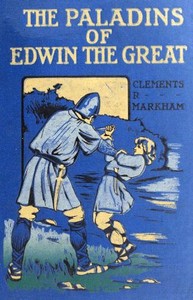
The Paladins of Edwin the Great — Key Ideas to Explore
Adventure Picaresque Fiction
71,574 recorded words. 23 minutes difference from this book's estimate.
View Gutenberg source #45543
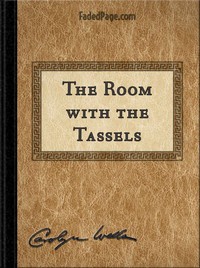
This digital edition of The Room with the Tassels — Background and Themes is described by source-level measurements including 66,372 words, 4 hr 49 min estimated reading time, and 10 detected text sections.
The text analysis averages about 13.8 words per sentence, while the detected sections provide another way to judge how the source is divided.
Project Gutenberg metadata also associates the work with “Detective and mystery stories,” connecting these edition facts with the source record’s subject description.
Explore this collection
These alternatives are selected using recorded categories and estimated reading time.
About 312 minutes
Adventure Picaresque Fiction
71,574 recorded words. 23 minutes difference from this book's estimate.
View Gutenberg source #45543About 314 minutes
Adventure Picaresque Fiction
72,186 recorded words. 25 minutes difference from this book's estimate.
View Gutenberg source #45732About 253 minutes
Adventure Picaresque Fiction
57,972 recorded words. 36 minutes difference from this book's estimate.
View Gutenberg source #44952Search stored excerpts and compare books → Choose by your preferences →
Choices use stored catalog measurements. Estimates vary with reading speed. A shared category is a catalog label, not a claim that two books have the same argument or literary quality.
Search reads excerpt text stored with this catalog and links to its associated Gutenberg record. The connection is stored in the site database; this tool does not recheck that every excerpt is word-for-word identical to that external record. Excerpt search does not cover every chapter and does not verify historical publication dates.
Catalog snapshot checked: 2026-09-26. Coverage: 98 public books, 98 available source excerpts.
Calculated from edition completeness, EPUB availability, text structure and catalogue metadata. Not a user rating.
Total of 100 points, scaled to a 2.5-5.0 range. Editions with an empty description or a missing EPUB file are not scored.
Public-domain source text
The source text is kept in the dedicated reader, separate from this catalogue record and its commentary.
The novel begins not with a ghost but with a debate about belief. In a New York parlour, Eve Carnforth insists that a friend saw and heard a supernatural presence, while others scoff. The talk turns to spiritualism, with references to Sir Oliver Lodge, and the group decides to rent the old Montgomery place—a house with a reputation. The early chapters establish a tone of light, social comedy: Milly Landon giggles, Eve tosses her Titian-coloured head, and the conversation is brisk and bantering. But the mood shifts abruptly when the narrative moves to the country house. By Chapter VII, two people are dead, a body has vanished, and the characters are trapped in a mystery that seems to defy natural explanation. The detective Pennington Wise does not appear until Chapter XIII, leaving the first third of the book to develop the puzzle and the characters' conflicting theories.
The opening chapter, “Wanted: A Haunted House,” introduces the central tension between scepticism and belief. Eve Carnforth argues for the reality of spirits, citing a friend's experience and the authority of Sir Oliver Lodge. Landon and Braye push back with rationalist objections. The scene is deliberately ordinary—a long, narrow parlour on East Seventieth Street—and the characters are drawn with quick, almost caricatured strokes: Milly is a “dumpling of a little woman” who giggles; Eve has red hair that “spells temper.” This social comedy serves as a foil for the darker events to come. The group's decision to rent the Montgomery place is presented as a lark, a way to test their theories. The reader is given no hint of the violence that will follow, but the debate about spiritualism establishes a framework: every subsequent event will be interpreted through the lens of the supernatural versus the material.
By the middle excerpts, the tone has shifted entirely. The group is now at the Montgomery house, and two deaths have occurred. The language becomes urgent and fearful. Characters speak of “inimical spirits” and “evil phantoms,” and Professor Hardwick declares himself a convert to spiritism. The disappearance of “little Vernie” adds a grotesque element: a body has been taken. The dialogue is filled with accusations and defensive glances—Norma looks at Eve “in a soft significant tone,” and Eve responds “defiantly.” The group is divided: some want to leave, others feel they must stay to avoid suspicion. The coroner, Crawford, is mentioned as a threat, a “pig-headed” man who will not accept supernatural explanations. The mystery is now explicitly a locked-room puzzle, but the characters are still arguing about whether the cause is human or ghostly. The reader is left with a tangle of motives and possibilities, none resolved.
Pennington Wise, the detective, does not appear until Chapter XIII, more than a third of the way through the book. This late entry is a structural choice: the first twelve chapters are devoted to the characters' own investigations and their growing terror. By the time Wise arrives, the reader has heard multiple conflicting accounts and has seen the characters' biases. Wise is introduced as a professional, but the excerpts give little sense of his methods. His assistant, Zizi, is mentioned in chapter titles but not described in the provided text. The delay in introducing the detective means that the puzzle is fully formed before any systematic investigation begins. The reader has had time to form hypotheses, and Wise's entrance promises a shift from emotional reaction to rational inquiry. However, the excerpts do not reveal whether he solves the case or whether the supernatural explanation is ultimately endorsed.
Several details recur across the excerpts. The phrase “the room with the tassels” never appears in the provided text, leaving its significance mysterious. The setting shifts from a city parlour to a country house, but the social dynamics remain constant: the same small group of friends, with their alliances and tensions. The debate about spiritualism is not resolved; instead, it intensifies after the deaths. The characters' names—Eve, Milly, Wynne, Braye, Hardwick—are used with a light, almost comic touch, even in the midst of horror. The narrative voice is detached, reporting dialogue and action without deep interiority. The reader is left with questions: What happened in the room with the tassels? Who killed whom? Is the explanation natural or supernatural? The excerpts do not answer these, but they establish that the novel is as much about the psychology of belief as about the puzzle itself.
Because the excerpts end before the detective's investigation is complete, a first-time reader should pay close attention to the early character dynamics. The debate about spiritualism is not mere background; it shapes how each character interprets events. Note who believes and who doubts, and how those positions shift after the violence. The title object—the room with the tassels—is never described in the provided text, so its meaning may emerge only in the later chapters. Treat the first twelve chapters as a slow-burn setup, and watch for how Wise's arrival changes the conversation.
Sometimes a book lingers less for its plot than for its atmosphere. Reading about the séance debates in The Room with the Tassels, I found myself recalling another old volume, where a young man inherits a strange legacy and the line between the mundane and the mysterious blurs in a similar, unhurried way. That quiet unease stayed with me, much like The Wizard's Son, Vol. 1 (of 3) — Reading Companion, which feels like an old friend's whisper rather than a shout.
Use these questions to collect your thoughts before moving on.