About 334 minutes
Dominie Dean: A Novel — Text and Context
Adventure Picaresque Fiction
76,619 recorded words. 4 minutes difference from this book's estimate.
View Gutenberg source #44220
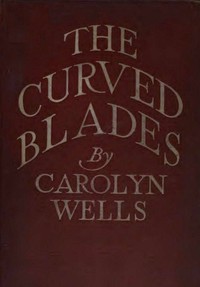
The source record for The Curved Blades — Reading Companion measures this digital text at 75,800 words, 5 hr 30 min estimated reading time, and 11 detected text sections.
The text analysis averages about 14.0 words per sentence, while the detected sections provide another way to judge how the source is divided.
Project Gutenberg metadata also associates the work with “Detective and mystery stories,” connecting these edition facts with the source record’s subject description.
Explore this collection
These alternatives are selected using recorded categories and estimated reading time.
About 334 minutes
Adventure Picaresque Fiction
76,619 recorded words. 4 minutes difference from this book's estimate.
View Gutenberg source #44220About 343 minutes
Adventure Picaresque Fiction
78,808 recorded words. 13 minutes difference from this book's estimate.
View Gutenberg source #47556About 314 minutes
Adventure Picaresque Fiction
72,186 recorded words. 16 minutes difference from this book's estimate.
View Gutenberg source #45732Search stored excerpts and compare books → Choose by your preferences →
Choices use stored catalog measurements. Estimates vary with reading speed. A shared category is a catalog label, not a claim that two books have the same argument or literary quality.
Search reads excerpt text stored with this catalog and links to its associated Gutenberg record. The connection is stored in the site database; this tool does not recheck that every excerpt is word-for-word identical to that external record. Excerpt search does not cover every chapter and does not verify historical publication dates.
Catalog snapshot checked: 2026-09-26. Coverage: 98 public books, 98 available source excerpts.
Calculated from edition completeness, EPUB availability, text structure and catalogue metadata. Not a user rating.
Total of 100 points, scaled to a 2.5-5.0 range. Editions with an empty description or a missing EPUB file are not scored.
Public-domain source text
The source text is kept in the dedicated reader, separate from this catalogue record and its commentary.
The first chapter of The Curved Blades establishes its setting with deliberate theatricality: a January snowstorm transforms the Long Island estate "Garden Steps" into "snowy fairyland flights," while a "supercilious moon" condescends to illuminate the scene in "stunning, if a bit theatric, fashion." This self-conscious stagecraft extends to the dialogue, where characters speak in clipped, mannered exchanges—Gray Haviland calls the view a "Ripping picture"—and the narrative voice often steps back to comment on its own effects. The murder victim, Miss Lucy Carrington, is introduced through her absence; the reader first encounters her home, her guests, and the tensions among them before any crime occurs.
Wells frames the mystery with a series of carefully composed scenes that feel like stage directions. The opening description of the snow-covered estate emphasizes visual spectacle: "wind-swept drifts half hid, half disclosed the curving marble balustrades." Characters often speak as if performing for an audience, as when Haviland draws a curtain to reveal the view, or when Count Charlier delivers a rehearsed-sounding protestation of innocence. The detective, Fleming Stone, treats interrogations as performances too, noting the Count's "slip" with satisfaction and muttering "Bother!" when a suspect evades him. This self-awareness about the artificiality of the genre gives the prose a playful, knowing quality.
Wells differentiates suspects through their word choices and speech rhythms. Count Charlier speaks in elaborate, self-justifying periods: "It is such absurdity," he declares, and later hedges about his marriage intentions with "I was considering the matter in my own mind." Fleming Stone, by contrast, uses short, pointed questions—"You proposed marriage?"—and interrupts prevarication with "Never mind all that, Count." The victim's reported remark, "To-morrow all will be different," becomes a verbal talisman repeated across testimonies, its ambiguity driving suspicion. Even minor characters reveal themselves through idiom: the burglar Bates, when he appears, likely speaks in a more colloquial register, though the excerpts do not show his dialogue.
The title object appears only in the excerpts as a chapter heading and a recurring motif. The "curved blades" may refer to a weapon, a tool, or a decorative item—the text does not specify in the provided passages. What is clear is that Wells uses physical objects as both clues and misdirection: a "paper snake," a man's glove, and a purchase by Pauline all become focal points of investigation. The detective's method involves listing suspects on a memorandum block, but the narrative also dwells on the material details of the setting—the "polished silver and glass" fittings of the library desk—suggesting that the environment itself may hold answers. The curved blades, whatever they are, function as a visual and verbal hook that ties the title to the plot without being fully explained in the excerpts.
Unlike the purely deductive detectives of the era, Fleming Stone relies heavily on psychological observation. He watches for hesitation, embarrassment, and slips of the tongue. When Count Charlier admits he was "glad to get the money," Stone pounces on the admission. The detective also pays close attention to what is not said: the Count's reluctance to specify whether he knew Miss Carrington for two or three months, and his evasion about the phrase "To-morrow all will be different." Stone's inaudible "Bother!" when the Count deflects a question reveals his frustration with human opacity. This emphasis on character reading over forensic detail gives the investigation a conversational, almost theatrical rhythm, fitting the novel's self-consciously staged world.
Money is a persistent undercurrent in the excerpts. Miss Carrington has bequeathed ten thousand dollars to Count Charlier, a sum that strikes Stone as peculiar given their short acquaintance. The Count's eagerness to receive it—"Yes, indeed!"—and his subsequent backtracking highlight the crudeness of financial motive. Other characters likely have similar stakes, though the excerpts do not reveal them. The mention of "Two Wills" as a chapter title suggests that the deceased may have left multiple or conflicting testaments, a classic device for generating suspicion. Wells uses the will not merely as a plot mechanism but as a lens through which to examine character: the Count's greed, Miss Stuart's possible inheritance, and the general atmosphere of entitlement among the household guests.
Readers approaching The Curved Blades should attend to the way Wells layers verbal and visual cues: a character's choice of words, the arrangement of furniture, the timing of a glance. The novel rewards attention to dialogue patterns and descriptive details that may seem merely decorative. Fleming Stone's method—listening for what people reveal despite themselves—invites the reader to become a co-investigator, parsing each speech for its hidden implications. The curved blades themselves may be the least important clue.
There’s something about winter estates and hidden motives in The Curved Blades that lingers—how secrets sit quietly in plain sight. It reminded me of another world, divided by war yet equally shadowed by unspoken loyalties, in The Border Spy; or, The Beautiful Captive of the Rebel Camp A Story of the War — Key Ideas to Explore. Both feel like rooms where everyone waits for someone else to speak first.
A brief reflection can help important ideas stay with you longer.