About 215 minutes
Malaeska: The Indian Wife of the White Hunter — Edition Insights
Adventure Picaresque Fiction
49,398 recorded words. 6 minutes difference from this book's estimate.
View Gutenberg source #46160
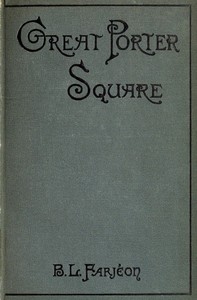
Great Porter Square: A Mystery. v. 2 — Edition Insights can be approached with a clearer sense of reading commitment from its source measurements: 47,959 words, 3 hr 29 min estimated reading time, and 5 detected text sections.
The text analysis averages about 16.4 words per sentence, while the detected sections provide another way to judge how the source is divided.
Project Gutenberg metadata also associates the work with “Fiction,” connecting these edition facts with the source record’s subject description.
Explore this collection
These alternatives are selected using recorded categories and estimated reading time.
About 215 minutes
Adventure Picaresque Fiction
49,398 recorded words. 6 minutes difference from this book's estimate.
View Gutenberg source #46160About 222 minutes
Adventure Picaresque Fiction
51,046 recorded words. 13 minutes difference from this book's estimate.
View Gutenberg source #44546About 183 minutes
Adventure Picaresque Fiction
41,909 recorded words. 26 minutes difference from this book's estimate.
View Gutenberg source #46720Search stored excerpts and compare books → Choose by your preferences →
Choices use stored catalog measurements. Estimates vary with reading speed. A shared category is a catalog label, not a claim that two books have the same argument or literary quality.
Search reads excerpt text stored with this catalog and links to its associated Gutenberg record. The connection is stored in the site database; this tool does not recheck that every excerpt is word-for-word identical to that external record. Excerpt search does not cover every chapter and does not verify historical publication dates.
Catalog snapshot checked: 2026-09-26. Coverage: 98 public books, 98 available source excerpts.
Calculated from edition completeness, EPUB availability, text structure and catalogue metadata. Not a user rating.
Total of 100 points, scaled to a 2.5-5.0 range. Editions with an empty description or a missing EPUB file are not scored.
Public-domain source text
The source text is kept in the dedicated reader, separate from this catalogue record and its commentary.
The second volume of Great Porter Square: A Mystery opens not with a detective but with a newspaper narrative—the “Evening Moon” concluding its account of Lydia Holdfast, a woman described as “child-like and volatile.” Farjeon immediately establishes a tension between public report and private anguish: Lydia, awaiting her husband’s return after the death of his son Frederick, is unaware that the notorious murder in Great Porter Square holds the answer to her fears. The narrative voice here is distanced, almost journalistic, yet it dwells on her “sweet mysterious delight” in impending motherhood and her gradual descent into feverish anxiety. This section sets up a pattern of withheld knowledge and contrasting emotional registers that runs through the volume.
The “Evening Moon” narrative paints Lydia Holdfast as a figure of poignant innocence: she “did not dream” that the London murder case “with which all the country was ringing” involved her husband. Her avoidance of newspapers in her delicate health becomes a crucial plot mechanism. In sharp contrast, the following chapters introduce Richard Manx making love to “sweet Becky” and Becky giving way to her feelings. Becky’s emotional volatility is set against Lydia’s passive waiting. Farjeon uses these parallel female figures—one secluded and hopeful, the other openly passionate—to explore different responses to crisis. The chapter titles themselves signal a deliberate fragmentation: the newspaper narrative, a love scene, a letter from “Justice,” and then Frederick Holdfast’s lengthy statement. This structure forces the reader to piece together truth from competing accounts.
Frederick Holdfast’s statement occupies the central portion of the volume, spanning five chapters. It is a first-person account that shifts the narrative into a confessional mode. Frederick describes a “solemn compact” with Adolph to open Sydney’s eyes to “the infamous scheme of which he was the victim.” The language is charged with moral outrage: Frederick speaks of “human treachery” and Sydney’s “intense chivalry.” A key episode involves Sydney defending Grace against a slight at a club, where he “lashed himself into a furious state of indignation” and attacked the character of the gentleman’s female relatives. Frederick’s narration here is self-aware; he compares himself to “an honest Iago,” acknowledging the theatricality of his role. The statement is not a straightforward confession but a performance designed to persuade—both Adolph and the reader.
Farjeon embeds multiple layers of mediation: newspaper reports, personal statements, letters, and dialogue. In one scene, Sydney flourishes a letter from his father expressing sorrow that he is “getting myself talked about in connection with a woman of disgraceful character.” Sydney’s response is a rhapsody of “extravagant adoration” for Grace, insisting that “the prize is worth it.” The chapter then ends with Sydney proposing to “take the bank at roulette”—a gambling metaphor that underscores the risk and deception at the heart of the plot. The juxtaposition of a father’s letter, a lover’s declaration, and a gambling table highlights the instability of truth. Each character’s voice is colored by self-interest or ignorance. The reader, like the characters, must weigh conflicting testimonies without a reliable narrator.
Readers approaching this volume should attend to the shifts in narrative voice—from the detached “Evening Moon” to Frederick’s impassioned statement to the dramatic scenes of courtship and confrontation. Farjeon offers no omniscient guide; instead, he presents a mosaic of partial perspectives. The murder in Great Porter Square remains a distant referent, its details withheld. This volume rewards careful attention to how each character frames their story, and to the gaps between what they say and what they know.
Reading Lydia’s held breath between letters brought back sitting with a novel long past midnight, waiting for a voice to return. The Wizard's Son, Vol. 2 (of 3) — Text and Context once held me in that same patient hush, where every page felt like listening for footsteps on a stair. Some mysteries aren’t about answers, just the ache of the pause.
Answer a few questions and save a private reflection on this device.