About 277 minutes
Judge Elbridge — Reading Companion
Historical Psychological Social Fiction
63,690 recorded words. 1 minutes difference from this book's estimate.
View Gutenberg source #46699
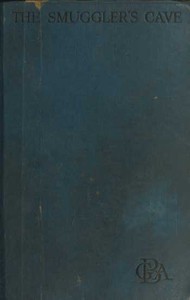
The Smuggler's Cave — Story, Setting & Ideas can be approached with a clearer sense of reading commitment from its source measurements: 63,435 words, 4 hr 36 min estimated reading time, and 6 detected text sections.
The text analysis averages about 14.6 words per sentence, while the detected sections provide another way to judge how the source is divided.
Project Gutenberg metadata also associates the work with “Villages -- England -- Fiction,” connecting these edition facts with the source record’s subject description.
Explore this collection
These alternatives are selected using recorded categories and estimated reading time.
About 277 minutes
Historical Psychological Social Fiction
63,690 recorded words. 1 minutes difference from this book's estimate.
View Gutenberg source #46699About 268 minutes
Historical Psychological Social Fiction
61,447 recorded words. 8 minutes difference from this book's estimate.
View Gutenberg source #44464About 260 minutes
Historical Psychological Social Fiction
59,742 recorded words. 16 minutes difference from this book's estimate.
View Gutenberg source #45100Search stored excerpts and compare books → Choose by your preferences →
Choices use stored catalog measurements. Estimates vary with reading speed. A shared category is a catalog label, not a claim that two books have the same argument or literary quality.
Search reads excerpt text stored with this catalog and links to its associated Gutenberg record. The connection is stored in the site database; this tool does not recheck that every excerpt is word-for-word identical to that external record. Excerpt search does not cover every chapter and does not verify historical publication dates.
Catalog snapshot checked: 2026-09-26. Coverage: 98 public books, 98 available source excerpts.
Calculated from edition completeness, EPUB availability, text structure and catalogue metadata. Not a user rating.
Total of 100 points, scaled to a 2.5-5.0 range. Editions with an empty description or a missing EPUB file are not scored.
Public-domain source text
The source text is kept in the dedicated reader, separate from this catalogue record and its commentary.
The novel opens with a sardonic introduction that dismisses the typical pageant as a fleeting amusement, then promises that the Hailey Compton Pageant—staged in a small, unimportant village—will 'excite England from end to end.' The narrator’s tone is wry and knowing, setting up a contrast between the modest origins (a vicar’s wife, an innkeeper, a young journalist) and the outsize consequences: a ruined earl’s reputation and a near-wrecked election. This gap between trivial cause and grand effect is the engine of the comedy.
The pageant becomes a stage for social jockeying. The innkeeper Linker, though a Nonconformist, reverently whispers the name of a popular bishop, valuing his 'social position.' He presses Sir Evelyn to recruit a statesman with a European reputation—not to attend, but merely to lend his name. The dialogue reveals a world where appearances and connections outweigh substance. Linker’s list of patrons grows absurdly, nearly including royalty, until he hesitates over Mr. E. P. East, the Head Surveyor of Customs and Excise. The name lands with a thud: Beth and Mary are 'totally uninterested.' The contrast between the grand names and this mundane official underscores the pageant’s entanglement with real-world bureaucracy.
The characters’ speech patterns mark their social positions. Sir Evelyn speaks in hesitant, conditional clauses: 'I think perhaps that you ought——' His nephew Jimmy, Lord Colavon, uses blunt, colloquial interruptions: 'I'm blest if I see how it can.' Linker’s language is obsequiously elaborate: 'I need scarcely say, my lord… we should be prepared to meet your lordship’s wishes in every way.' The repetition of 'in every way' becomes a comic refrain, especially when Hinton echoes it. Mary, an actress, cuts through the politesse with practical concerns about her 'Nautch Girl dance' and the risk of bishops objecting. The dialogue thus layers deference, defiance, and self-interest, each character’s voice revealing their agenda.
The title object—a cave—is not directly described in the excerpts, but its function emerges through the pageant’s need for a lugger. Jimmy agrees to 'purchase of the lugger' and 'steer the lugger when the great day comes,' linking the pageant to smuggling lore. The cave likely provides a setting for clandestine activity, but the excerpts show the real intrigue happening in drawing-room negotiations. The cave may be a MacGuffin, a pretext for the characters to assemble. The narrator’s ironic framing—'What could possibly be less important?'—suggests that the cave’s literal significance is secondary to the social dynamics it sets in motion.
The narrator adopts a mock-heroic tone, treating the pageant’s trivial origins with exaggerated gravity. The introduction personifies destiny as 'a sportive imp' that plays tricks with human affairs. This voice persists into the chapters, where the characters’ earnest scheming is undercut by the narrator’s wry commentary. The structure itself is playful: the transcriber notes an extra Chapter XIV following Chapter XV, a numbering error that mirrors the novel’s own topsy-turvy logic. The reader is invited to enjoy the chaos rather than seek a tidy plot. The irony is not cruel but amused, watching the characters entangle themselves in their own ambitions.
Readers should attend to the gap between what characters say and what they mean. The pageant is a pretext for personal advancement, and the novel’s comedy lies in watching these motives collide. The excerpts offer no resolution, but the introduction promises scandal—so expect the trivial to erupt into the consequential. The cave itself may remain offstage, but its name haunts the proceedings like a promise of hidden depths.
The rain drummed on the windows that afternoon while I was lost in the smugglers' farce, with its crooked vicar and borrowed costumes. The whole village performance felt so fragile, so destined for collapse—and somehow that reminded me of another crumbling order, the Wars of the Roses. I reached for Red and White: A Tale of the Wars of the Roses — Text and Context and simply started reading, the rain still falling outside.
Build a private reading journal entry for this title.