About 336 minutes
Basil Everman — Text and Context
Historical Psychological Social Fiction
77,262 recorded words. 1 minutes difference from this book's estimate.
View Gutenberg source #46405
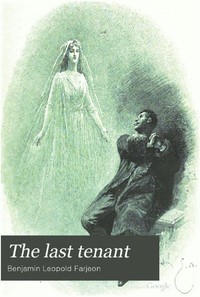
The catalog record for The Last Tenant — A Closer Reading provides practical reading context through 77,024 words, 5 hr 35 min estimated reading time, and 10 detected text sections.
The text analysis averages about 15.3 words per sentence, while the detected sections provide another way to judge how the source is divided.
Project Gutenberg metadata also associates the work with “London (England) -- Fiction,” connecting these edition facts with the source record’s subject description.
Explore this collection
These alternatives are selected using recorded categories and estimated reading time.
About 336 minutes
Historical Psychological Social Fiction
77,262 recorded words. 1 minutes difference from this book's estimate.
View Gutenberg source #46405About 332 minutes
Historical Psychological Social Fiction
76,268 recorded words. 3 minutes difference from this book's estimate.
View Gutenberg source #44115About 346 minutes
Historical Psychological Social Fiction
79,452 recorded words. 11 minutes difference from this book's estimate.
View Gutenberg source #44182Search stored excerpts and compare books → Choose by your preferences →
Choices use stored catalog measurements. Estimates vary with reading speed. A shared category is a catalog label, not a claim that two books have the same argument or literary quality.
Search reads excerpt text stored with this catalog and links to its associated Gutenberg record. The connection is stored in the site database; this tool does not recheck that every excerpt is word-for-word identical to that external record. Excerpt search does not cover every chapter and does not verify historical publication dates.
Catalog snapshot checked: 2026-09-26. Coverage: 98 public books, 98 available source excerpts.
Calculated from edition completeness, EPUB availability, text structure and catalogue metadata. Not a user rating.
Total of 100 points, scaled to a 2.5-5.0 range. Editions with an empty description or a missing EPUB file are not scored.
Public-domain source text
The source text is kept in the dedicated reader, separate from this catalogue record and its commentary.
The narrator of The Last Tenant opens by describing himself as a man of peaceful habits, content with his cozy ten-roomed house and modest competence. His wife's restlessness, however, soon propels them into house-hunting and, eventually, into the eerie property at 79 Lamb's Terrace. The novel's early chapters establish a contrast between domestic stability and the unsettling pull of the unknown, a tension that deepens as the narrator becomes increasingly absorbed in the house's secrets.
The narrator's voice is that of a cautious, observant man who prefers old-fashioned ways and avoids ambition. He describes himself as “not forever looking up at persons above me,” and his wife reproaches him for lacking lofty social views. This dynamic sets up a central tension: the narrator is drawn into a mystery not by his own curiosity but by external pressures. His methodical approach—waiting for his wife to disclose her schemes, making “no inquiries” until she is ready—mirrors his later investigative style. He gathers information patiently, as seen when he interviews the squatter Barbara, allowing her to “ramble on in her own way” rather than pressing her with abrupt questions. This deliberate pacing gives the novel a psychological depth, focusing on the narrator's internal responses rather than mere plot mechanics.
Barbara, the young woman living secretly in the haunted house, speaks in a distinct dialect that contrasts sharply with the narrator's polished prose. Her account of survival—gathering coal from wagon droppings, burning furniture for warmth, and dodging police by never lighting a stove fire—is rendered in vivid, colloquial language: “I could 'ardly move, but I knew I was done for if I didn't stir my pegs.” Her resourcefulness is matched by her emotional anchor: Molly, a friend who taught her about heaven and hell and whose words “kept me up over and over agin.” Barbara's story is not merely a tale of hardship; it is a testament to the power of memory and moral instruction. The narrator notes that her cheeks glow and eyes sparkle as she speaks, suggesting that the act of telling her story is itself transformative. Her presence reframes the haunted house not as a site of supernatural terror but as a refuge for the desperate.
The house in Lamb's Terrace is more than a setting; it is a repository of secrets. The narrator's investigations reveal that Barbara has lived there for years without detection, coming and going “allus very careful,” peeping round corners, and hiding at the sound of a step. Her claim that she can “hear a blade o' grass whisper” underscores the hyper-vigilance required for such an existence. The house itself becomes a character through its material details: the empty stove, the coal cellar, the furniture gradually burned for warmth. The narrator's experiments—such as ringing the bell and observing the response—suggest a methodical attempt to understand the house's rhythms. The novel's structure, with chapters titled “The Answer to the Bell” and “I Make Some Singular Experiments,” emphasizes the process of discovery. The house's silence is not empty; it is filled with the echoes of Barbara's footsteps and the memory of Molly.
Readers approaching The Last Tenant should attend to the interplay between the narrator's measured observations and Barbara's raw, urgent testimony. The novel rewards attention to small details—the way a character hesitates, the specific objects that accumulate meaning. Farjeon builds suspense not through gothic excess but through the slow revelation of human desperation and resilience. The haunted house, ultimately, is a space where social invisibility and personal history converge.
That rainy afternoon, I kept returning to the narrator’s quiet ache for Barbara, the way her survival felt both fragile and stubborn, like moss in a cracked wall. The book ended, but that gray unease lingered, and I found myself pulling down Red as a Rose is She: A Novel — Key Ideas to Explore almost without thinking. It offered a softer counterpoint, all delicate feeling and gentle resolve, until the rain stopped and I realized both stories shared the same quiet pulse of endurance.
Create a short personal record of your experience with this book.