About 646 minutes
The Angel of Pain — Inside the Classic
Historical Psychological Social Fiction
148,538 recorded words. 9 minutes difference from this book's estimate.
View Gutenberg source #44210
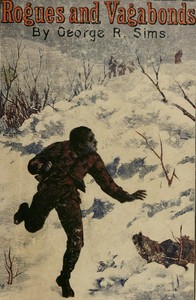
This digital edition of Rogues and Vagabonds — A Reader’s Guide is described by source-level measurements including 150,587 words, 10 hr 55 min estimated reading time, and 70 detected text sections.
The text analysis averages about 15.6 words per sentence, while the detected sections provide another way to judge how the source is divided.
Project Gutenberg metadata also associates the work with “London (England) -- Fiction,” connecting these edition facts with the source record’s subject description.
Explore this collection
These alternatives are selected using recorded categories and estimated reading time.
About 646 minutes
Historical Psychological Social Fiction
148,538 recorded words. 9 minutes difference from this book's estimate.
View Gutenberg source #44210About 636 minutes
Historical Psychological Social Fiction
146,142 recorded words. 19 minutes difference from this book's estimate.
View Gutenberg source #43148About 628 minutes
Historical Psychological Social Fiction
144,217 recorded words. 27 minutes difference from this book's estimate.
View Gutenberg source #47674Search stored excerpts and compare books → Choose by your preferences →
Choices use stored catalog measurements. Estimates vary with reading speed. A shared category is a catalog label, not a claim that two books have the same argument or literary quality.
Search reads excerpt text stored with this catalog and links to its associated Gutenberg record. The connection is stored in the site database; this tool does not recheck that every excerpt is word-for-word identical to that external record. Excerpt search does not cover every chapter and does not verify historical publication dates.
Catalog snapshot checked: 2026-09-26. Coverage: 98 public books, 98 available source excerpts.
Calculated from edition completeness, EPUB availability, text structure and catalogue metadata. Not a user rating.
Total of 100 points, scaled to a 2.5-5.0 range. Editions with an empty description or a missing EPUB file are not scored.
Public-domain source text
The source text is kept in the dedicated reader, separate from this catalogue record and its commentary.
From its first sentence—'The ship was going down!'—George R. Sims's Rogues and Vagabonds establishes a pattern of abrupt, dramatic openings that signal shifts in fortune and location. The novel's seventy chapters alternate between Heritage Hall, a country estate, and the cramped lodgings of Little Queer Street, London, where characters like Mr. Jabez Duck and Bess Smith navigate suspicion and secrecy. Sims varies his narrative pace markedly: early chapters move swiftly through shipwreck and ghost sightings, while later sections slow to dwell on legal proceedings and whispered confessions. This rhythm mirrors the characters' own oscillations between flight and confrontation, as when old Marks and Bess 'stole out of the gates of Heritage Park' under cover of darkness. The prose itself shifts between standard narration and heavy dialect, particularly in the speech of working-class figures, grounding the melodrama in a specific social texture.
Sims assigns distinct speech patterns to his characters, using dialect not merely for local colour but to signal social position and hidden knowledge. The lodge-keeper Marks speaks in a thick rural vernacular: 'I fear it 'ud only do him a power o' harm' and 'If they got me before the lawyers, and made me speak what I know, it ud hang him.' His daughter Bess, though also from the country, uses more standard English, reflecting her education or aspirations. In contrast, the London criminals—such as those in 'Smith and Co.'—employ a different slang, tied to urban fraud and forgery. This linguistic divide reinforces the novel's geography: the country is a place of inherited loyalty and buried secrets, the city a realm of calculated deception. The reader must attend to who speaks plainly and who hedges, as evasions often precede revelations.
The novel's seventy chapters create a rhythm of short, punchy scenes followed by longer expository passages. Early chapters like 'The Wreck of the Bon Espoir' and 'Topsey Turvey Sees a Ghost' open in medias res, plunging the reader into crisis. Later chapters—such as 'Hunted Down'—slow to describe trial proceedings and the gathering of evidence, building tension through legal detail rather than action. Sims also uses retrospective chapters (e.g., 'Is Slightly Retrospective') to pause the forward motion and fill in backstory, a technique that controls information flow. The effect is a narrative that alternately rushes and lingers, keeping the reader off-balance. Key revelations often occur in quiet moments: a confession in a lodge, a letter read in solitude. The pacing thus mirrors the characters' own uncertainty about when danger will strike next.
Several motifs recur across the excerpts, linking the rural and urban halves of the story. Ghosts appear literally—Topsey Turvey sees one, and later 'Jabez Sees the Ghost'—but also metaphorically, as characters haunt old homes and past crimes. The act of watching or being watched is pervasive: Marks 'bolted the door' and fell into agitation; Bess feels 'a marked woman; something for the curious to gaze at.' Objects of value—jewellery, a forged cheque, a bunch of violets—travel between hands, often as evidence of guilt or tokens of affection. The 'Bible' that Gertie possesses may be another such object, linking inheritance to moral judgment. These repeated elements create a dense symbolic network, where a stolen item or a glimpsed figure can shift the plot's direction. Readers should note how Sims returns to these images, as they often foreshadow reversals.
Because the excerpts cover only the opening and a middle section, the full arc of Rogues and Vagabonds remains partly obscured. Readers should pay attention to how Sims handles the transition from Heritage Hall to London and back, and whether the dialect patterns shift as characters move between settings. The novel's length—over 150,000 words—suggests a leisurely unraveling of its many threads; patience with the episodic structure will reward those who track the recurring motifs of flight, disguise, and hidden identity.
I’ve often wondered how young James would have fared in a grander story, for beneath the rogues of Sims’s London lies a quiet ache for home. That same ache of inheritance whispers through The Bishop's Apron: A study in the origins of a great family — Text and Context, though from the other side—how a family’s name becomes its own kind of gilded cage. They sit together, these two, like old neighbors.
Create a short personal record of your experience with this book.