About 636 minutes
An English Squire — Inside the Classic
Historical Psychological Social Fiction
146,142 recorded words. 8 minutes difference from this book's estimate.
View Gutenberg source #43148
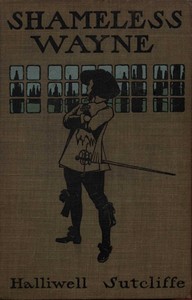
The source record for Shameless Wayne: A Romance of the last Feud of Wayne and Ratcliffe — Reading Companion measures this digital text at 144,217 words, 10 hr 28 min estimated reading time, and 15 detected text sections.
The text analysis averages about 17.8 words per sentence, while the detected sections provide another way to judge how the source is divided.
Project Gutenberg metadata also associates the work with “Scotland -- Social life and customs -- Fiction,” connecting these edition facts with the source record’s subject description.
Explore this collection
These alternatives are selected using recorded categories and estimated reading time.
About 636 minutes
Historical Psychological Social Fiction
146,142 recorded words. 8 minutes difference from this book's estimate.
View Gutenberg source #43148About 619 minutes
Historical Psychological Social Fiction
142,242 recorded words. 9 minutes difference from this book's estimate.
View Gutenberg source #45178About 646 minutes
Historical Psychological Social Fiction
148,538 recorded words. 18 minutes difference from this book's estimate.
View Gutenberg source #44210Search stored excerpts and compare books → Choose by your preferences →
Choices use stored catalog measurements. Estimates vary with reading speed. A shared category is a catalog label, not a claim that two books have the same argument or literary quality.
Search reads excerpt text stored with this catalog and links to its associated Gutenberg record. The connection is stored in the site database; this tool does not recheck that every excerpt is word-for-word identical to that external record. Excerpt search does not cover every chapter and does not verify historical publication dates.
Catalog snapshot checked: 2026-09-26. Coverage: 98 public books, 98 available source excerpts.
Calculated from edition completeness, EPUB availability, text structure and catalogue metadata. Not a user rating.
Total of 100 points, scaled to a 2.5-5.0 range. Editions with an empty description or a missing EPUB file are not scored.
Public-domain source text
The source text is kept in the dedicated reader, separate from this catalogue record and its commentary.
The novel begins not with a duel or a declaration of war, but with a little old woman in a belfry tower, knitting a woollen stocking and tolling the death bell with her foot. She takes two and seventy stitches between each stroke, her lips moving in time with the needles. The dead man is Anthony Wayne, and she begrudges the half-hour tolling his widow has paid for—two-and-sixpence for a man's soul-speed. This opening establishes a world where time, money, and ritual are intimately measured, and where the living judge the dead by the quality of their send-off.
The feud between Wayne and Ratcliffe is not yet in motion, but the ground is prepared: the sexton's wife calls the widow a 'milkblooded wench' and a 'furriner,' hinting at the insular, suspicious community that will shape the conflict. The wind races over the moor and cobwebs brush the woman's cheek; the landscape itself seems to press in on human affairs.
The opening chapter uses the death bell as a metronome for the community's values. The sexton's wife counts stitches and minutes with equal precision, and her monologue reveals a hierarchy of worth: a Wayne deserves more than a half-hour's tolling, but the widow's parsimony—or poverty—has shortchanged the dead man's journey. The bell is not merely a signal; it is a transaction, a measure of respect, and a source of gossip. The woman's muttered criticism of the widow—'not Marshcotes bred nawther'—foreshadows the novel's preoccupation with belonging and exclusion. Later, the Brown Dog Barguest appears as a different kind of omen, one that cannot be bought or measured. When Mistress Wayne claims to have seen the dog fawn on her son Ned, the Lean Man's skepticism crumbles; the dog's whimper and shaggy coat become a tangible dread. The contrast between the bell's mechanical tolling and the dog's uncanny visitation sets up a tension between the ordered world of custom and the unruly forces of superstition and fate.
Sutcliffe renders the speech of his moorland characters in a dense dialect that carries its own rhythm and judgment. The sexton's wife says 'nobbut a poor half-hour o' th' bell' and 'there's no mak o' gooid in 't'; her words are as sharp as her knitting needles. Nanny Witherlee, the dream-eyed woman who watched Wayne's body, speaks in the same register: 'ye've getten th' second-sight' and 'yourn 'ull be th' greatest help of all.' The dialect is not merely local color; it is a marker of insider knowledge, of a world where Barguest is real and where a woman who has seen the Brown Dog is both feared and trusted. When Nicholas Ratcliffe tries to dismiss the superstition—'Devil take thee! There's no such thing'—his standard English sets him apart from the moor folk, but his sweat and backward glance betray him. The novel uses these vocal contrasts to map the characters' relationships to the landscape and its legends. The Lean Man's sneer that he would 'fight him with a dozen Waynes to back him' is undercut by Nanny's quiet certainty: 'ony one can see that Barguest hes getten his teeth in.'
By Chapter XIV, the feud has become a domestic trap for Janet, the granddaughter of the Lean Man. She fears for Shameless Wayne's life and dreads being forced into wedlock with a cousin; her grandfather has set Wayne's life as the price of her hand. The narrative notes that 'trouble, indeed, seemed closing in on Wildwater' during days of sun and snow and northeast winds—the weather itself mirrors the tightening noose. The Lean Man is failing in body and mind, 'as if he had been stricken by some unseen blade,' and he watches his own shadow fearfully. Janet's fondness for him is complicated by her terror of what he might do. The feud is not a matter of open battle but of bargains, threats, and the slow erosion of trust. Red Ratcliffe presses his suit with threats of telling all to old Nicholas, and Janet has no one to turn to. The excerpt gives no resolution, but it makes clear that the feud's violence is as much psychological as physical, and that the women of the story—Mistress Wayne, Nanny, Janet—are caught between loyalty and survival.
Readers should attend to the novel's use of dialect and folk belief as more than decoration: they are the language of power and prophecy. The Brown Dog Barguest is not a mere ghost story; it is a measure of who sees clearly and who is blind. The feud between Wayne and Ratcliffe is conducted through bargains, threats, and the slow erosion of trust, and the women—the sexton's wife, Mistress Wayne, Nanny, Janet—are its sharpest observers. The novel rewards attention to the weight of a half-hour's tolling, the pattern of a knitting needle, and the sound of a dog's whimper on the wind.
Those stitches in the sexton’s wife’s hands brought back a quieter sort of clock, the kind that measures hours by endurance rather than sound. I thought of The Mysteries of London, v. 1/4 — Reading Companion, where the city’s pulse feels similarly unhurried, even amid turmoil. Both seem to wait for something—a bell, a page—rather than chase it.
Use these questions to collect your thoughts before moving on.