About 226 minutes
Colin Clink, Volume 2 (of 3) — Themes and Context
Historical Psychological Social Fiction
51,827 recorded words. 1 minutes difference from this book's estimate.
View Gutenberg source #44902
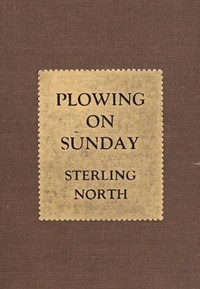
Before opening Plowing On Sunday — Inside the Classic, the edition data offers a quick orientation: 52,186 words, 3 hr 47 min estimated reading time, and 6 detected text sections.
The text analysis averages about 16.3 words per sentence, while the detected sections provide another way to judge how the source is divided.
Project Gutenberg metadata also associates the work with “Farm life -- Fiction,” connecting these edition facts with the source record’s subject description.
Explore this collection
These alternatives are selected using recorded categories and estimated reading time.
About 226 minutes
Historical Psychological Social Fiction
51,827 recorded words. 1 minutes difference from this book's estimate.
View Gutenberg source #44902About 236 minutes
Historical Psychological Social Fiction
54,226 recorded words. 9 minutes difference from this book's estimate.
View Gutenberg source #45800About 240 minutes
Historical Psychological Social Fiction
55,182 recorded words. 13 minutes difference from this book's estimate.
View Gutenberg source #48620Search stored excerpts and compare books → Choose by your preferences →
Choices use stored catalog measurements. Estimates vary with reading speed. A shared category is a catalog label, not a claim that two books have the same argument or literary quality.
Search reads excerpt text stored with this catalog and links to its associated Gutenberg record. The connection is stored in the site database; this tool does not recheck that every excerpt is word-for-word identical to that external record. Excerpt search does not cover every chapter and does not verify historical publication dates.
Catalog snapshot checked: 2026-09-26. Coverage: 98 public books, 98 available source excerpts.
Calculated from edition completeness, EPUB availability, text structure and catalogue metadata. Not a user rating.
Total of 100 points, scaled to a 2.5-5.0 range. Editions with an empty description or a missing EPUB file are not scored.
Public-domain source text
The source text is kept in the dedicated reader, separate from this catalogue record and its commentary.
The novel opens with Sarah Brailsford hurrying through an April downpour, her lantern casting "gigantic shadows" as she searches for her husband. The description is immediate and physical: willow branches whip across her face, she crosses a flooded creek, and the lightning reveals Stud Brailsford trotting between the thills of his wagon, hatless and singing a hymn. This scene establishes a pattern of sensory detail—the gleam of puddles, the creak of the spring wagon—that anchors the fiction in tangible experience. North's diction favors concrete nouns and active verbs, avoiding abstraction in favor of the felt weight of weather and landscape.
North's word choices repeatedly emphasize the physicality of farm life. When Sarah hears Stud's voice, it is described as "deep, full" and capable of moving her even in her forty-third year—a detail that ties emotion to bodily sensation. The narrator notes the "rushing buggy ruts" and "muddy torrents," selecting verbs that convey motion and resistance. Later, when Peter Brailsford walks through town, his coveralls are "greasy" and his hands "blackened," small markers of labor that contrast with the clean surfaces of the Palace theater and the Red Moon Bar. The author avoids romanticizing work; instead, he registers its marks on clothing, skin, and the landscape.
Dialogue in the excerpts is sparse but carefully chosen. Sarah's anxious call—"Stanley! Stanley! what's happened?"—uses repetition and the contraction "what's" to suggest urgency and familiarity. Stud's response is not quoted directly, but his hymn-roaring implies a voice that fills the storm. The toddler's exclamation "Dod damn" is a phonetic rendering that captures childish mispronunciation while also echoing adult profanity, a detail that signals the permeability between generations. North also reports speech indirectly: Peter "managed a loud and joyous greeting" to Maxine, but the actual words are withheld, emphasizing his awkwardness. The author trusts dialect and rhythm to convey character without over-explaining.
The narrative moves between close third-person perspectives, shifting from Sarah's anxious search to Peter's adolescent reverie. The opening chapter stays tight on Sarah's sensory experience—the lantern light, the wind, the familiar landmarks of lake and bluff. Later, the focalization transfers to Peter, whose interior monologue is rendered in free indirect style: "Life was very full and romantic, thought Peter Brailsford." The structure allows the reader to inhabit different consciousnesses without authorial intrusion. The transition from Sarah's panic to Peter's daydreaming is abrupt, suggesting a novel that juxtaposes adult responsibility with youthful fantasy. The chapters are grouped into five books, each likely marking a shift in time or emphasis.
Weather is not merely setting but an active force. The April downpour, the "mounting wind," and the "flooded creek" in the opening pages create a world where characters are constantly in motion against the elements. Light sources—lanterns, lightning, kerosene lamps, the "bright billboards" of the theater—are specified with care. The landscape is named precisely: Charley's Bluff, Lake House Point, the limestone cliff. These proper nouns root the fiction in a particular Wisconsin geography. Peter's walk through Brailsford Junction includes the Dingle Brothers' General Store, the Red Moon Bar, and the Palace theater, each rendered with a detail that suggests a town known intimately. The recurring motif of watching—Sarah searching, Peter gazing at Maxine's house, the men slapping their thighs—underscores a community defined by observation.
Readers attentive to North's craft will find a novel built from small, precise observations rather than sweeping statements. The author's restraint in dialogue and his commitment to physical detail reward close reading. Pay attention to how characters are introduced through their actions and surroundings rather than through exposition. The excerpts suggest a work that values the specific over the general, and that trusts the reader to infer meaning from concrete particulars.
I keep thinking about how Sterling North captured the weight of a single Sunday—the mud, the milk pails, the quiet grudges. It stayed with me like weather. Then I stumbled onto The Washer of the Ford: Legendary moralities and barbaric tales — Key Ideas to Explore, and felt that same old pull, stories that hum beneath ordinary work, half-remembered and oddly dear.
Capture what you thought, learned, and would like to remember.