About 336 minutes
Basil Everman — Text and Context
Historical Psychological Social Fiction
77,262 recorded words. 10 minutes difference from this book's estimate.
View Gutenberg source #46405
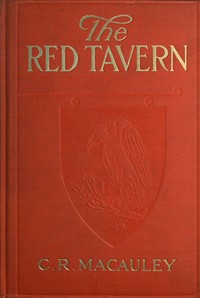
This digital edition of The Red Tavern — A Closer Reading is described by source-level measurements including 79,452 words, 5 hr 46 min estimated reading time, and 8 detected text sections.
The text analysis averages about 18.6 words per sentence, while the detected sections provide another way to judge how the source is divided.
Project Gutenberg metadata also associates the work with “Historical fiction,” connecting these edition facts with the source record’s subject description.
Explore this collection
These alternatives are selected using recorded categories and estimated reading time.
About 336 minutes
Historical Psychological Social Fiction
77,262 recorded words. 10 minutes difference from this book's estimate.
View Gutenberg source #46405About 335 minutes
Historical Psychological Social Fiction
77,024 recorded words. 11 minutes difference from this book's estimate.
View Gutenberg source #43199About 332 minutes
Historical Psychological Social Fiction
76,268 recorded words. 14 minutes difference from this book's estimate.
View Gutenberg source #44115Search stored excerpts and compare books → Choose by your preferences →
Choices use stored catalog measurements. Estimates vary with reading speed. A shared category is a catalog label, not a claim that two books have the same argument or literary quality.
Search reads excerpt text stored with this catalog and links to its associated Gutenberg record. The connection is stored in the site database; this tool does not recheck that every excerpt is word-for-word identical to that external record. Excerpt search does not cover every chapter and does not verify historical publication dates.
Catalog snapshot checked: 2026-09-26. Coverage: 98 public books, 98 available source excerpts.
Calculated from edition completeness, EPUB availability, text structure and catalogue metadata. Not a user rating.
Total of 100 points, scaled to a 2.5-5.0 range. Editions with an empty description or a missing EPUB file are not scored.
Public-domain source text
The source text is kept in the dedicated reader, separate from this catalogue record and its commentary.
The Red Tavern opens not at the tavern but in a tent, with a cross-bow that will not string and a crook-back enemy beyond a brook. The prologue's urgent, broken dialogue—"S-s-st, there, good gossip"—immediately establishes a world of whispered councils and mechanical failure. This initial scene, set on the eve of battle, introduces a pattern the novel sustains: action is often anticipated or remembered rather than directly shown, and objects (a cross-bow, a cutting of velvet) carry emotional weight. The narrative moves between cramped, candlelit interiors and open landscapes, between the solitary knight and the crowded hall, creating a rhythm of withdrawal and return that shapes the reader's experience.
The table of contents reveals a novel built around movement: Sir Richard travels to Castle Yewe, returns to the Red Tavern, journeys southward, and ventures into the Forest of Lammermuir. Chapter titles repeatedly announce departures and arrivals—"On the Way to Castle Yewe," "Of How Sir Richard Came to Castle Yewe," "Of How Sir Richard Came to the Shepherd's Hut." This is not mere travelogue; each journey marks a shift in the knight's circumstances and loyalties. The narrative lingers on the moments between destinations: a night in a shepherd's hut, a vision in the forest, a meeting with foot-boys. These interstitial scenes, where little plot advances but mood deepens, are where the novel's psychological texture emerges. The reader, like Sir Richard, is kept in a state of anticipation, never quite arriving until the final chapter.
One object recurs with talismanic force: a cutting of saffron velvet given by Lady Anna. In the excerpt, Sir Richard takes it from his doublet, holds it at arm's length, and regards it "with an expression of deep melancholy." He imagines the cloth has eyes that look at him "with sad, reproachful glances." This is not a simple token of romance; it becomes a conscience object, a physical reminder of a vow. The velvet appears at a moment of transition—after his message is delivered, before he dresses for the feast—and its presence anchors his interior life. The novel uses such tangible details to externalize emotion: the cutting is handled, gazed upon, and sworn to, making abstract loyalty into something that can be held. Readers should watch for this cloth's reappearances; it functions as a silent character.
The feast at Castle Yewe is described with lavish specificity: the "highly polished red cedar" wainscoting, the tapestries of "martial scenes," the "forty wax torches." Yet the narrative immediately before this public spectacle is private—Sir Richard alone in his chamber, sitting on the edge of the bed, lost in thought. This oscillation between solitude and society is a deliberate structural choice. The novel gives equal weight to the knight's internal reflections and the crowded hall's wassail and laughter. The reader moves from the quiet of a shepherd's hut to the noise of a cobbler's feast, from a solitary vision in the forest to a council of jackdaws. These shifts prevent any single mood from dominating and keep the story tethered to both the character's mind and his world.
Despite the title, the Red Tavern is not the constant setting. It appears in chapter III ("Of a Night in the Red Tavern") and again in chapter XX ("Of Sir Richard's Return to the Red Tavern") and chapter XXV ("Of the End of the Red Tavern"). The tavern functions as a threshold—a place of encounter, rest, and transformation—rather than a fixed home. The novel's geography is circular: Sir Richard leaves the tavern, travels to Castle Yewe, returns, and then ventures out again. The final chapter title, "Of How a Fledgling Dropped from the Conspirator's Nest," suggests a departure from the tavern's orbit entirely. This pattern of leaving and returning gives the novel a folkloric structure, where the inn is both a starting point and a point of return, but not an ending. The reader is invited to track how each visit to the tavern changes the knight.
Readers will find that Macauley's novel rewards attention to its architecture: the way scenes are paired, the recurrence of objects, and the careful placement of silence against noise. The story does not rush; it pauses in shepherd's huts and on forest paths. Approach it as a series of framed episodes rather than a straight narrative line. The pleasure lies in the detours.
Years of shelving have taught me that journeys rarely end where maps promise, and The Red Tavern — A Closer Reading murmurs this truth alongside its saffron velvet cutting. Yet that same restless thread binds to another spine: the quieter war-torn homecomings of Red and White: A Tale of the Wars of the Roses — Text and Context, where return stays a stranger. They keep each other company.
Capture what you thought, learned, and would like to remember.