About 335 minutes
The Last Tenant — A Closer Reading
Historical Psychological Social Fiction
77,024 recorded words. 3 minutes difference from this book's estimate.
View Gutenberg source #43199
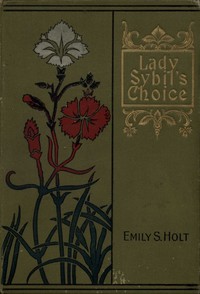
The catalog record for Lady Sybil's Choice: A Tale of the Crusades — Edition Insights provides practical reading context through 76,268 words, 5 hr 32 min estimated reading time, and 12 detected text sections.
The text analysis averages about 13.6 words per sentence, while the detected sections provide another way to judge how the source is divided.
Project Gutenberg metadata also associates the work with “Historical fiction,” connecting these edition facts with the source record’s subject description.
Explore this collection
These alternatives are selected using recorded categories and estimated reading time.
About 335 minutes
Historical Psychological Social Fiction
77,024 recorded words. 3 minutes difference from this book's estimate.
View Gutenberg source #43199About 336 minutes
Historical Psychological Social Fiction
77,262 recorded words. 4 minutes difference from this book's estimate.
View Gutenberg source #46405About 321 minutes
Historical Psychological Social Fiction
73,644 recorded words. 11 minutes difference from this book's estimate.
View Gutenberg source #44463Search stored excerpts and compare books → Choose by your preferences →
Choices use stored catalog measurements. Estimates vary with reading speed. A shared category is a catalog label, not a claim that two books have the same argument or literary quality.
Search reads excerpt text stored with this catalog and links to its associated Gutenberg record. The connection is stored in the site database; this tool does not recheck that every excerpt is word-for-word identical to that external record. Excerpt search does not cover every chapter and does not verify historical publication dates.
Catalog snapshot checked: 2026-09-26. Coverage: 98 public books, 98 available source excerpts.
Calculated from edition completeness, EPUB availability, text structure and catalogue metadata. Not a user rating.
Total of 100 points, scaled to a 2.5-5.0 range. Editions with an empty description or a missing EPUB file are not scored.
Public-domain source text
The source text is kept in the dedicated reader, separate from this catalogue record and its commentary.
From its first sentence—'Alix says I am a simpleton'—Emily Sarah Holt establishes a narrator whose colloquial, self-deprecating voice drives the novel's perspective. Elaine, the speaker, reports events with a blend of indignation and affection, her tone shifting between sharp judgments ('Amaury, thou art an idiot!') and tender loyalty toward her brother Guy. This choice of a first-person witness rather than an omniscient narrator limits the reader's knowledge to Elaine's perceptions, creating a sense of immediacy and partiality.
Holt's prose is marked by a deliberate archaism—'Damoiselle,' 'Messire,' 'mesel'—that situates the tale in the medieval Crusader states without overwhelming the dialogue. The excerpts reveal a pattern of conversational sparring, where characters argue over politics, gender, and faith using pointed biblical references, as when Lady Judith contrasts 'snow' and 'sunbeam' to challenge Lady Isabel's self-righteousness.
Elaine's narration is the novel's most distinctive feature. She speaks in short, emphatic sentences, often punctuated by exclamation marks and rhetorical questions: 'Did I not say that Amaury was an idiot? And is it not true?' This style conveys a youthful, impulsive personality, but Holt also uses it to filter political commentary. When Elaine complains that Lady Sybil is 'passed by' for the crown, she frames it as personal vexation—'I really feel vexed about it'—rather than abstract principle, making the succession crisis feel like a family quarrel.
The narrator's voice is also self-aware. She admits that Alix's repeated insults might have convinced her 'if she did not say so of anybody but me,' a wry acknowledgment of her own bias. Holt thus creates a narrator who is both unreliable in her loyalties and endearing in her candor. The reader must weigh Elaine's judgments—such as her distrust of the Count of Tripoli—against the limited evidence she provides.
Holt's dialogue often functions as theological and ethical debate, with characters quoting or paraphrasing scripture to score points. Lady Judith's rebuke to Lady Isabel—'let her that thinketh she standeth, take heed lest she fall'—is a direct biblical citation (1 Corinthians 10:12), used to check Isabel's pride. Isabel's retort about 'snow and soot' is met with a metaphor of 'sunbeam' versus 'snow,' illustrating two views of human righteousness: self-reliance versus divine grace.
These exchanges are not merely ornamental; they reveal character. Lady Isabel's 'snap' of her scissors and her blunt 'I do not understand you' show impatience with moral nuance, while Lady Judith's calm persistence suggests a teacherly patience. Holt does not let the debate become preachy; Isabel's exit—'I am going now'—leaves the argument unresolved, mirroring real disagreements.
The excerpts ground the political crisis—King Baldwin IV's abdication in favor of the infant Baldwin V—in domestic reactions. Elaine's jealousy on behalf of Lady Sybil ('Why must she be the subject of her own child?') personalizes the succession dispute, while Amaury's dismissive 'She's a woman. What does a woman know about governing?' injects contemporary gender attitudes into the historical setting.
Holt uses Elaine's limited perspective to hint at larger tensions. The Count of Tripoli is described as a 'fawning' friend who will 'kick the ladder down,' a prediction that colors the political landscape with suspicion. The setting—the Holy City, the Church of the Holy Sepulchre—is evoked through ceremonial details (proclamation, coronation) rather than extensive description, keeping the focus on human reactions.
Holt's diction walks a line between historical flavor and readability. Terms like 'mesel' (leper) and 'Damoiselle' are used without gloss, trusting the reader to infer meaning from context. The preface's poem—'Oh restful, blissful ignorance!'—sets a devotional tone that recurs in characters' speech, but the narrative itself avoids heavy moralizing.
The novel's structure, with chapter titles like 'Guy Takes the Cross' and 'Sybil's Choice,' signals key plot points without revealing outcomes. Holt's use of epigraphs (Tennyson's 'infant crying in the night') frames Elaine's voice as one of vulnerability. The overall effect is a story that feels both historically situated and emotionally immediate, achieved through consistent authorial restraint in description and reliance on dialogue.
Readers attentive to Elaine's voice will notice how Holt uses her narrator's limitations to create dramatic irony: we suspect more than Elaine tells us. The novel rewards those who track biblical allusions and political asides, as they often foreshadow conflicts. For a work of historical fiction, Lady Sybil's Choice is remarkably focused on inner life and conversation, making it a study in how personal loyalties intersect with public duty.
Reading how Elaine’s colloquial voice shapes the crusader world, I remembered sitting with my grandmother, who spoke of history as if she’d lived it. She loved the hush in old books. Great Porter Square: A Mystery. v. 3 — Background and Themes gave me that same quiet ache—not plot, but the weight of lives glimpsed. Perhaps that’s why I linger on editorial notes now.
Capture what you thought, learned, and would like to remember.