About 305 minutes
The Riddle of the Purple Emperor — Themes and Context
Fairy Tales Myths Imaginary Worlds
70,023 recorded words. 14 minutes difference from this book's estimate.
View Gutenberg source #43135
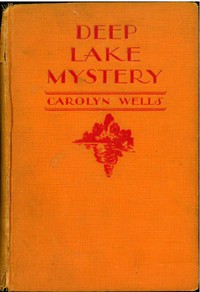
The source record for The Deep Lake Mystery — A Reader’s Guide measures this digital text at 73,182 words, 5 hr 19 min estimated reading time, and 11 detected text sections.
The text analysis averages about 13.5 words per sentence, while the detected sections provide another way to judge how the source is divided.
Project Gutenberg metadata also associates the work with “Fiction,” connecting these edition facts with the source record’s subject description.
Explore this collection
These alternatives are selected using recorded categories and estimated reading time.
About 305 minutes
Fairy Tales Myths Imaginary Worlds
70,023 recorded words. 14 minutes difference from this book's estimate.
View Gutenberg source #43135About 295 minutes
Fairy Tales Myths Imaginary Worlds
67,664 recorded words. 24 minutes difference from this book's estimate.
View Gutenberg source #47817About 294 minutes
Fairy Tales Myths Imaginary Worlds
67,615 recorded words. 25 minutes difference from this book's estimate.
View Gutenberg source #44984Search stored excerpts and compare books → Choose by your preferences →
Choices use stored catalog measurements. Estimates vary with reading speed. A shared category is a catalog label, not a claim that two books have the same argument or literary quality.
Search reads excerpt text stored with this catalog and links to its associated Gutenberg record. The connection is stored in the site database; this tool does not recheck that every excerpt is word-for-word identical to that external record. Excerpt search does not cover every chapter and does not verify historical publication dates.
Catalog snapshot checked: 2026-09-26. Coverage: 98 public books, 98 available source excerpts.
Calculated from edition completeness, EPUB availability, text structure and catalogue metadata. Not a user rating.
Total of 100 points, scaled to a 2.5-5.0 range. Editions with an empty description or a missing EPUB file are not scored.
Public-domain source text
The source text is kept in the dedicated reader, separate from this catalogue record and its commentary.
The opening chapter of The Deep Lake Mystery presents a corpse arranged with deliberate strangeness: a flower wreath on the brow, a garland across the chest, an ivory crucifix in one hand, an orange in the other, and a red feather duster plume behind the head, all framed by a red chiffon scarf. The narrator, Gray, immediately connects this to ancient burial practices, hinting at a ritualistic or symbolic motive. This bizarre tableau is the central image around which the investigation revolves.
The narrative voice is conversational, with Gray addressing the reader directly and quoting Abraham Lincoln on storytelling. The structure alternates between first-person recollection and dialogue-driven scenes, as Gray, his friend Keeley Moore, and other characters debate the meaning of the clues. The excerpts show a pattern of moving from vivid description to analytical discussion, a rhythm that likely continues throughout the book.
The description of Sampson Tracy’s body is the most striking element in the excerpts. The items placed on and around him—flowers, an orange, a crucifix, a feather duster, crackers, and a handkerchief—are not random. The narrator explicitly compares the arrangement to Indian or Egyptian funerary customs, suggesting the killer intended a symbolic statement. The red chiffon scarf acts as a unifying frame, tying the disparate objects together. This deliberate staging raises questions: is it a message, a mockery, or a misguided act of respect? The investigation hinges on interpreting this scene.
A recurring debate in the excerpts concerns the use of imagination versus facts. Lora insists that imagination must not be used as a basis for argument, while Keeley Moore encourages speculative theories. The characters freely propose motives and scenarios—such as the Spanish story of The Nail—without evidence. This tension between creative theorizing and hard facts drives the plot. The reader is invited to weigh each suggestion, knowing that the truth may be more mundane or more bizarre than any guess. The narrative itself acknowledges this by having Gray note that they lack enough facts to settle even basic relationships among suspects.
The excerpts show a clear structural pattern: a discovery (the body, a clue) is followed by a discussion among the amateur detectives. The opening chapter describes the corpse in detail, then shifts to Gray’s recollection of how the investigation began. Later, the group debates the significance of the nail and hammer, the motives of various suspects, and the possibility of an accomplice. This back-and-forth creates a rhythm of revelation and analysis. The setting moves from the death chamber to a room where the characters gather, suggesting that much of the action takes place in conversation rather than in active pursuit.
Several objects recur in the excerpts, each potentially significant. The nail and hammer are discussed as the murder weapon, with speculation about whether they were brought to the scene or picked up impulsively. The red feather duster, mentioned in the initial description, is later referred to as part of “the feather-duster lot” of clues. The orange and crackers appear only in the death scene but are not explained. These items form a constellation of evidence that the characters try to connect. The narrative treats them as pieces of a puzzle, but the excerpts do not reveal how they fit together, leaving the reader to wonder which will prove crucial.
Readers approaching The Deep Lake Mystery should pay close attention to the arrangement of objects on the body and to the characters’ differing methods of reasoning. The story unfolds through dialogue and deduction rather than action, so tracking each theory and its basis is essential. The excerpts suggest that the solution may lie in interpreting the killer’s symbolic language, not just in physical evidence.
The rain slid down the window as I reached the end of The Deep Lake Mystery — A Reader’s Guide, the oddness of that feather duster still lingering. Something about the amateur sleuths’ patient, circular talk reminded me of another kind of patient waiting, so I pulled down my old copy of The Chaplain of the Fleet — Context and Discussion instead of shelving it. The afternoon simply folded into that quieter story.
Create a short personal record of your experience with this book.