About 215 minutes
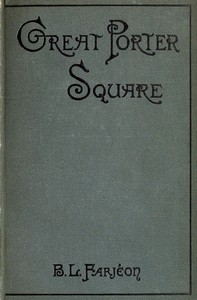
Great Porter Square: A Mystery. v. 1 — Text and Context
Fairy Tales Myths Imaginary Worlds
49,445 recorded words. 153 minutes difference from this book's estimate.
View Gutenberg source #42905
For That Pup — A Closer Reading, the stored edition analysis reports 14,034 words, 1 hr 2 min estimated reading time, and 2 detected text sections.
The text analysis averages about 19.2 words per sentence, while the detected sections provide another way to judge how the source is divided.
Project Gutenberg metadata also associates the work with “Dogs -- Fiction,” connecting these edition facts with the source record’s subject description.
Explore this collection
These alternatives are selected using recorded categories and estimated reading time.
About 215 minutes
Fairy Tales Myths Imaginary Worlds
49,445 recorded words. 153 minutes difference from this book's estimate.
View Gutenberg source #42905About 215 minutes
Fairy Tales Myths Imaginary Worlds
49,385 recorded words. 153 minutes difference from this book's estimate.
View Gutenberg source #44226About 244 minutes
Fairy Tales Myths Imaginary Worlds
55,994 recorded words. 182 minutes difference from this book's estimate.
View Gutenberg source #47315Search stored excerpts and compare books → Choose by your preferences →
Choices use stored catalog measurements. Estimates vary with reading speed. A shared category is a catalog label, not a claim that two books have the same argument or literary quality.
Search reads excerpt text stored with this catalog and links to its associated Gutenberg record. The connection is stored in the site database; this tool does not recheck that every excerpt is word-for-word identical to that external record. Excerpt search does not cover every chapter and does not verify historical publication dates.
Catalog snapshot checked: 2026-09-26. Coverage: 98 public books, 98 available source excerpts.
Calculated from edition completeness, EPUB availability, text structure and catalogue metadata. Not a user rating.
Total of 100 points, scaled to a 2.5-5.0 range. Editions with an empty description or a missing EPUB file are not scored.
Public-domain source text
The source text is kept in the dedicated reader, separate from this catalogue record and its commentary.
Butler opens with a neighborly complaint: Murchison wants to get rid of a dog. The narrator, speaking in a colloquial, confiding tone, immediately establishes the story's comic rhythm—a series of absurd episodes delivered with straight-faced logic. The pup Fluff arrives by express from New York, a mystery that sets the plot in motion. Butler's humor relies on the contrast between the narrator's matter-of-fact reporting and the increasingly improbable events, such as Fluff pulling up a hydrant or attempting to fly when a gun is fired.
The narrator presents himself as a neighbor who has heard the story from Murchison and Brownlee, creating a chain of hearsay that distances the reader from direct action. This layered narration allows Butler to exaggerate without claiming firsthand knowledge. For instance, when describing Fluff's arrival, the narrator says, "As near as I could gather from what Murchison and Mrs. Murchison told me, it was a little, fluffy, yellow ball." The qualifier "as near as I could gather" signals that the account may be embellished. The narrator's tone remains earnest even as he reports that Fluff "jumped six feet straight into the air" and dragged a hydrant away. This deadpan delivery is the engine of the comedy: the more outlandish the feat, the more calmly it is reported.
Butler structures the humor around a pattern of escalation. Each character's attempt to deal with Fluff—whether shooting, training, or simply tolerating—results in a more ridiculous outcome. Brownlee tries to make a duck dog of Fluff; the dog responds by trying to fly. The narrator tries to shoot Fluff; the dog pulls up the hydrant and flees. The repetition of failed solutions, each more absurd than the last, builds a cumulative effect. The characters themselves become part of the joke: they rationalize Fluff's behavior with elaborate explanations. Massett argues that Fluff's flight shows intelligence—"he tries to fly. Gets right up and tries to fly"—turning a failure into a sign of cleverness. This pattern of rationalization mirrors the narrator's own deadpan logic, reinforcing the story's comic voice.
Butler's prose mimics oral storytelling, with short, punchy sentences and frequent interruptions. The narrator often breaks off to address the reader directly: "Think of that! Twelve hundred miles in a box, with a can of condensed milk tied to the box and 'Please feed' written on it." These asides create a conversational pace, slowing the narrative to savor each absurd detail. The dialogue, too, is clipped and repetitive, as when Murchison worries, "If I could just think who sent it," then repeats the same concern. This verbal tic reinforces the characters' obsession. The pace quickens during action sequences—Fluff's escape is described in a rapid series of verbs: "jumped," "pulled," "went away," "took." The contrast between the leisurely, anecdotal framing and the sudden bursts of motion gives the story its distinctive rhythm.
Readers should attend to the way Butler uses the narrator's limited perspective to amplify the comedy. The story never reveals Fluff's inner life; the dog remains an opaque force of nature, interpreted only through the baffled reactions of the townspeople. This restraint is key to the humor: the more the characters try to explain Fluff, the more inexplicable he becomes. The tale rewards attention to the subtle shifts in tone—from worry to admiration to resignation—that mark each failed attempt to control the pup.
Reading about that pup’s chaos reminded me of my old neighbor’s beagle, who once ate an entire birthday cake and then looked smug about it. There’s something tender in watching trouble unfold without judgment. The Man Who Did the Right Thing: A Romance — Text and Context gave me that same quiet warmth, like laughing at a mistake we can’t help but love.
Use these questions to collect your thoughts before moving on.