About 400 minutes
John Inglesant: A Romance (Volume 1 of 2) — Themes and Context
Fairy Tales Myths Imaginary Worlds
91,834 recorded words. 8 minutes difference from this book's estimate.
View Gutenberg source #44587
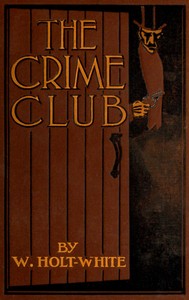
Before opening The Crime Club — Reading Companion, the edition data offers a quick orientation: 90,084 words, 6 hr 32 min estimated reading time, and 9 detected text sections.
The text analysis averages about 17.0 words per sentence, while the detected sections provide another way to judge how the source is divided.
Project Gutenberg metadata also associates the work with “Fiction,” connecting these edition facts with the source record’s subject description.
Explore this collection
These alternatives are selected using recorded categories and estimated reading time.
About 400 minutes
Fairy Tales Myths Imaginary Worlds
91,834 recorded words. 8 minutes difference from this book's estimate.
View Gutenberg source #44587About 451 minutes
Fairy Tales Myths Imaginary Worlds
103,702 recorded words. 59 minutes difference from this book's estimate.
View Gutenberg source #43736About 319 minutes
Fairy Tales Myths Imaginary Worlds
73,182 recorded words. 73 minutes difference from this book's estimate.
View Gutenberg source #46064Search stored excerpts and compare books → Choose by your preferences →
Choices use stored catalog measurements. Estimates vary with reading speed. A shared category is a catalog label, not a claim that two books have the same argument or literary quality.
Search reads excerpt text stored with this catalog and links to its associated Gutenberg record. The connection is stored in the site database; this tool does not recheck that every excerpt is word-for-word identical to that external record. Excerpt search does not cover every chapter and does not verify historical publication dates.
Catalog snapshot checked: 2026-09-26. Coverage: 98 public books, 98 available source excerpts.
Calculated from edition completeness, EPUB availability, text structure and catalogue metadata. Not a user rating.
Total of 100 points, scaled to a 2.5-5.0 range. Editions with an empty description or a missing EPUB file are not scored.
Public-domain source text
The source text is kept in the dedicated reader, separate from this catalogue record and its commentary.
The Crime Club opens not with a detective but with a blackmailer caught mid-burglary, held at gunpoint by a man who claims to be “psychologically interested” in his movements. The scene aboard the liner Gigantic establishes a tone of controlled menace and verbal sparring rather than procedural investigation. Despite the title and catalog subject “Detective and mystery stories,” the excerpts show little interest in forensic detail or puzzle construction. Instead, the narrative dwells on power dynamics, disguise, and the manipulation of appearances—a pattern that continues through later episodes involving drugged clothing changes and a woman playing baccarat under duress.
The catalog assigns this work to “Detective and mystery stories,” yet the excerpts contain no detective figure, no systematic inquiry, and no gradual revelation of hidden facts. The opening confrontation between Captain Melun and Sir Paul Westerham is a standoff of nerves, not deduction. Westerham’s later reflections on a murder at Walter’s Hotel treat the crime as a tool of intimidation rather than a mystery to be solved. The phrase “purposeless deed” suggests that the author is less interested in motive than in the atmospheric threat of violence. The so-called Crime Club—which appears only in the table of contents—may be a syndicate of criminals rather than a group of sleuths, further blurring the generic boundary.
One of the most extended excerpts places Lady Kathleen at a gaming table, the only woman in a room of “coarse faces.” The narrative emphasizes her incongruity: her opera cloak, bare arms, and “eyes bright as stars” set against the “fleshy cheeks of middle-aged Jews” and “pale clerks.” Westerham’s observations shift from the game to her emotional state—her lips trembling, her luck changing when she sees him. The scene is framed as a test of nerve, not a clue to a larger puzzle. The author uses the gambling house as a stage for social contrast and psychological pressure, a recurring device that owes more to melodrama than to the detective tradition.
Westerham’s memory is repeatedly compromised: chloroform “hung heavy in his brain,” and he later finds his clothes changed while drugged. These episodes foreground the unreliability of perception, a theme more typical of sensation fiction than of rational deduction. The narrative withholds the motives behind these acts—Melun’s purpose in the murder, the reason for the clothing swap—leaving the reader as disoriented as the protagonist. This technique creates suspense through confusion rather than through the orderly presentation of clues. The catalog’s “detective-mystery” label may thus mislead readers expecting a puzzle plot; the book’s actual texture is closer to adventure-tinged psychological thriller.
Readers approaching The Crime Club through its catalog entry should set aside expectations of ratiocination or fair-play clues. The novel operates by different rules: its mysteries are atmospheric, its crimes are instruments of coercion, and its hero is often a passive observer. The excerpts suggest a work more interested in the spectacle of danger and the fragility of composure than in the restoration of order. Those who enjoy early twentieth-century thrillers with a melodramatic bent will find more to engage with here than devotees of the classic whodunit.
I keep returning to that strange, uneasy opening—the quiet standoff before anything happens. It reminded me of the months I spent with The Manchester Rebels of the Fatal '45 — Reading Companion, where the real tension never came from battles, but from waiting in rooms, watching shadows move. Both books felt less like puzzles and more like weather pressing against a window.
Use these questions to collect your thoughts before moving on.