
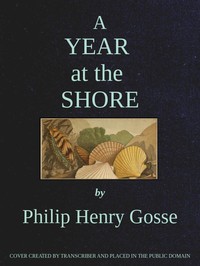
A year at the shore by Philip Henry Gosse
Published in 1859, Philip Henry Gosse's A Year at the Shore is a month-by-month journey into the teeming life of England's Devon coast. Forget dry textbooks; this is a field journal written with the excitement of discovery. Gosse, a brilliant naturalist, spent a year observing, collecting, and sketching everything from sea anemones and crabs to delicate seaweeds, all through the changing seasons.
The Story
There isn't a traditional plot with characters, but there is a clear narrative: the story of a place over time. The book is structured as a series of observations from January to December. We follow Gosse as he wades into chilly rock pools in spring, hunts for specimens under summer sun, and witnesses the shore's dramatic transformation during autumn storms and winter frosts. Each chapter focuses on the creatures and events characteristic of that month. He describes the ‘bloom’ of plankton in the water, the mating rituals of crabs, and the fierce competition for space on a crowded rock. It’s the story of a hidden world, told in real time.
Why You Should Read It
You should read it because Gosse’s wonder is contagious. His writing makes you feel like you’re right there beside him, peering into his collecting jar. He gets genuinely excited about a sea slug’s color or the engineering of a worm’s tube. In an age before high-definition nature documentaries, his detailed descriptions and beautiful illustrations (included in many editions) were how people first ‘saw’ this universe. More than just a catalog, the book captures a moment in science where careful observation was king. It’s a powerful reminder to slow down and look—really look—at the natural world around us. The drama he finds in a tide pool is as gripping as any novel.
Final Verdict
This book is perfect for curious beachcombers, fans of classic natural history writing, and anyone who needs a dose of awe. If you enjoy the works of later writers like Rachel Carson or Gerald Durrell, you’ll find their spiritual ancestor in Gosse. It’s also a great pick for readers interested in the history of science. Fair warning: the language is of its time (mid-1800s), so it feels more formal than a modern blog, but Gosse’s passion blazes through every page. Don't rush it. Savor a chapter at a time, and let it transform your next visit to the shore.
There are no legal restrictions on this material. Share knowledge freely with the world.








Richard Garcia
3 months agoI was skeptical about the depth of this book at first, but the structural organization allows for quick referencing of key points. A perfect balance of theory and practical advice.