
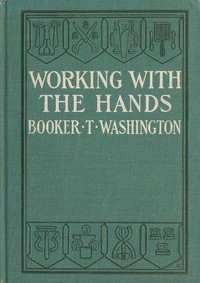
Working With the Hands by Booker T. Washington
Forget dry history lessons. 'Working With the Hands' is Booker T. Washington's masterclass in practical philosophy. Written after his famous Atlanta address, this book is his deep dive into the 'how.' How do you actually lift a people? How do you build a future from the ground up? He lays out his vision, centered on the Tuskegee Institute, where students learned by doing—constructing their own buildings, farming their own food, mastering trades.
The Story
There isn't a traditional plot with heroes and villains. Instead, Washington builds his case like a skilled craftsman. He starts with the foundational idea that true education isn't just about filling the head; it's about training the hand and the heart together. He walks us through Tuskegee's fields, workshops, and classrooms, showing how brickmaking, carpentry, and agriculture taught discipline, precision, and pride. He argues this practical skill is the first, essential step toward economic independence and social respect. The 'conflict' is against the prevailing idea that only classical, literary education counted as real advancement. Washington respectfully but firmly champions a different path to power.
Why You Should Read It
This book hit me in a way I didn't expect. In our world of knowledge economies and digital everything, Washington's celebration of manual competence feels revolutionary. His prose is clear, confident, and packed with quiet conviction. You feel his deep respect for the farmer, the blacksmith, the builder. Reading it, I kept thinking about today's 'skills gap' and our collective anxiety about what a 'good job' really is. Washington connects dignity directly to the ability to create and repair the physical world. It's a profound reminder that some truths are timeless. The chapters on the moral lessons learned in a workshop—punctuality, teamwork, seeing a project through—are just as relevant in an office or a startup today.
Final Verdict
This is a must-read for anyone interested in the roots of American education, economic history, or simply great ideas that stand the test of time. It's perfect for teachers, makers, entrepreneurs, and anyone who's ever felt that something is missing in our modern, often abstract, way of working and learning. It’s not a long book, but its ideas have serious weight. You'll finish it looking at your own work—and the world around you—with fresh, more appreciative eyes.
This is a copyright-free edition. Distribute this work to help spread literacy.
David Rodriguez
10 months agoAs a long-time follower of this subject matter, the wealth of information provided exceeds the average market standard. A trustworthy resource that I'll keep in my digital library.
Donald Taylor
1 year agoThe balance between academic rigor and readability is perfect.
Steven Robinson
8 months agoFrom the very first page, the arguments are well-supported by credible references. I will read more from this author.
Ethan Lopez
1 year agoEssential reading for students of this field.






Robert Lee
10 months agoInitially, I was looking for a specific answer, but the critical analysis of current industry standards is very timely. The price-to-value ratio here is simply unbeatable.