
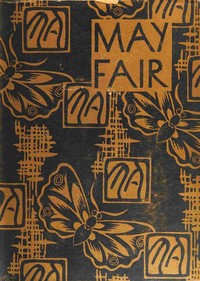
May Fair : being an entertainment purporting to reveal to gentlefolk the real…
Ever feel like you're watching a beautiful, slow-motion car crash? That's the vibe of Michael Arlen's May Fair. Published in 1925, it's a snapshot of London's most exclusive set, living in a bubble of parties and privilege right after World War I.
The Story
There's not one single plot, but a series of connected scenes and character studies. We drift through the lives of the very rich in London's Mayfair district. We meet men and women who have everything money can buy and nothing that truly satisfies them. They fall in and out of love with alarming speed, trade cutting remarks at dinner parties, and spend their days in a fog of luxury and longing. The central 'conflict' is internal: a deep, collective boredom and a search for genuine emotion in a world built on pretense. It's less about what happens to them, and more about how they feel—or don't feel—as it happens.
Why You Should Read It
I picked this up expecting a fluffy period piece, but Arlen's wit is like a stiletto—thin, sharp, and it leaves a mark. He doesn't just describe the glitter; he shows you the glue holding it together, and it's often pretty cheap. The characters should be unlikeable (and many are), but there's a haunting sadness to their pursuits. You get the sense they're all running from the memory of the recent war, trying to drown it in champagne. It's a fascinating look at the psychological cost of a 'good time.' My favorite parts were the quiet moments of self-awareness, when a character suddenly sees the emptiness of their own life. It’s in those flashes that the book feels startlingly modern.
Final Verdict
This isn't a book for someone who needs a fast-paced thriller. It's a mood piece. Perfect for fans of 'The Great Gatsby' who want another take on Jazz Age disillusionment, or for anyone who enjoys character-driven stories about the gap between public image and private reality. If you like your historical fiction with a side of sharp social observation and a touch of melancholy glamour, spend a weekend in Arlen's May Fair. Just don't expect to leave feeling lighthearted.
Legal analysis indicates this work is in the public domain. Preserving history for future generations.
Emma Gonzalez
2 years agoI came across this while browsing and the content flows smoothly from one chapter to the next. I will read more from this author.
Lisa Thompson
1 year agoAmazing book.
Carol Miller
1 year agoAfter hearing about this author multiple times, it challenges the reader's perspective in an intellectual way. I learned so much from this.







Emily Lopez
1 year agoThis book was worth my time since the storytelling feels authentic and emotionally grounded. This story will stay with me.