
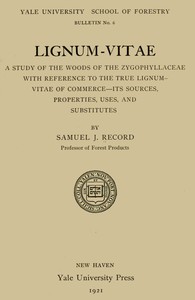
Lignum-vitae : a study of the woods of the Zygophyllaceae with reference to…
Let's be clear from the start: this is not a novel. There are no characters in the traditional sense, unless you count the trees themselves. 'Lignum-vitae' is Samuel J. Record's life's work, distilled into a technical manual. Published in 1921, it's a systematic breakdown of the wood anatomy of the Zygophyllaceae family, a group that includes the famous Lignum-vitae trees, renowned for their density and durability.
The Story
There's no plot twist, but there is a clear narrative of investigation. Record sets out with a mission: to provide a definitive guide for identifying these commercially important woods based solely on their microscopic structure. The 'story' is his method. He takes us through the geography of where these trees grow, then meticulously describes the woods—their color, grain, weight, and how they behave when cut. The heart of the book is the detailed analysis of cellular structures seen under a microscope. He compares species, points out unique identifying features, and provides detailed diagrams. It’s a forensic file for botanists and woodworkers, building a case for accurate identification piece by precise piece.
Why You Should Read It
You should read it for the sheer, concentrated expertise. This book is a window into a pre-digital age of science, where knowledge was built through physical observation and meticulous hand-drawn illustration. There's a profound respect for the material world that comes through. Record isn't just listing facts; he's revealing a hidden architecture. When he explains how the arrangement of cells gives Lignum-vitae its legendary hardness, you're seeing the 'why' behind a property people had used for centuries. It transforms a piece of wood from a simple object into a complex, engineered material. Reading it feels like looking over the shoulder of a master craftsman or detective at work.
Final Verdict
This is a specialty book, but its appeal is broader than you'd think. It's perfect for history or science buffs who enjoy primary sources, woodworkers and luthiers curious about their materials, or anyone with a passion for obscure, hyper-focused non-fiction. It's not a casual weekend read, but as a dip into the mind of an early 20th-century scientist, it's utterly absorbing. Think of it as the botanical equivalent of a deep-cut documentary—you come away with a real sense of wonder for something you previously never thought about.
There are no legal restrictions on this material. Share knowledge freely with the world.
Joseph Rodriguez
4 months agoThis is an essential addition to any academic digital library.
Kenneth Lopez
7 months agoA must-have for anyone studying this subject.
Daniel Robinson
9 months agoComprehensive and well-researched.
Barbara White
4 months agoUsed this for my thesis, incredibly useful.







Sarah White
1 month agoThis digital copy caught my eye due to its reputation, the practical checklists included are a great touch for real-world use. I feel much more confident in my knowledge after finishing this.